Concrete driveway building
We dig out the old driveway, pack a new base and pour a slab that drains toward the street, with a broom finish, light brushed lines that give tires and shoes grip.
City of Atwater Concrete is a concrete contractor based in Atwater, working in Franklin, CA. We pour driveways, patios, walks, steps, slabs and retaining walls for Franklin homes, and every one starts with careful work on the ground underneath.
Franklin sits just west of Merced, with Highway 99 along its southern edge. It's an unincorporated community, so Merced County handles building permits and inspections here instead of a city hall. We come over from Atwater for the same flatwork, our word for driveways, patios and walks, that we pour in Delhi and the other cities around us.
Most calls are about cracked or sinking driveways, uneven walks and water that pools where it shouldn't. The price moves with the size of the slab, how much old concrete has to come out, how much digging and base work the ground needs and the finish you choose. The schedule turns on whether the county needs to issue a permit first and on the curing wait below. I'll measure and write it all up at the estimate so you can see what's included before you decide.
If the budget's tight, I'd recommend keeping the money in the subgrade, the packed ground the slab sits on, because a nice finish can't save a slab that settles with the dirt under it.
Before we set forms, we check where rain and sprinkler water goes, so the new slab slopes away from your house and garage instead of sending water back toward them.
Curing is the wait while fresh concrete gains strength, so you'll walk on it well before you park on it, and we'll go over the wait for your slab at the estimate.
We dig out the old driveway, pack a new base and pour a slab that drains toward the street, with a broom finish, light brushed lines that give tires and shoes grip.
Back patios usually have to meet existing doors and steps, so we set the height and slope first and keep rainwater moving away from the house before we pour.
Stamped concrete gets its stone or brick pattern pressed in while the slab is still soft, so we plan the layout and color with you before the truck arrives.
We pour front walks and side paths that line up with your driveway and steps, sloped a little to shed water and finished so they aren't slick underfoot.
We break out cracked or sunken garage slabs, rebuild the base and pour a new floor sloped toward the door, so water off the car drains out instead of pooling.
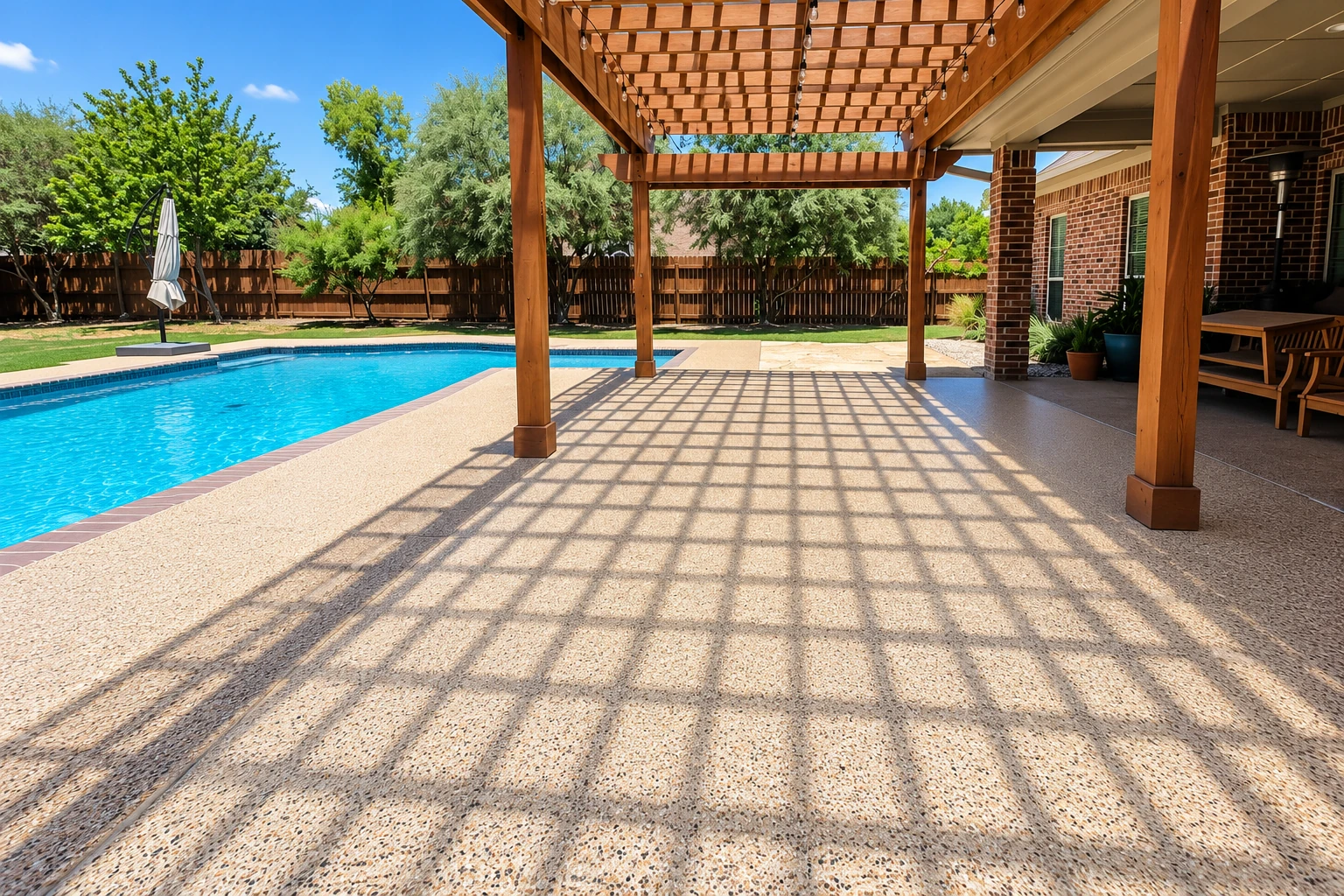
Colored concrete, exposed aggregate and scored patterns can dress up a patio or walk, and we'll show you samples and talk through how each one wears and cleans.
We build concrete retaining walls to hold back soil where your yard changes height, with a footing, steel and drainage behind the wall so water doesn't push against it.
For shops, additions and outbuildings, we pour interior concrete floors over a packed base, set to meet doors and framing, and finished smooth or textured as you need.
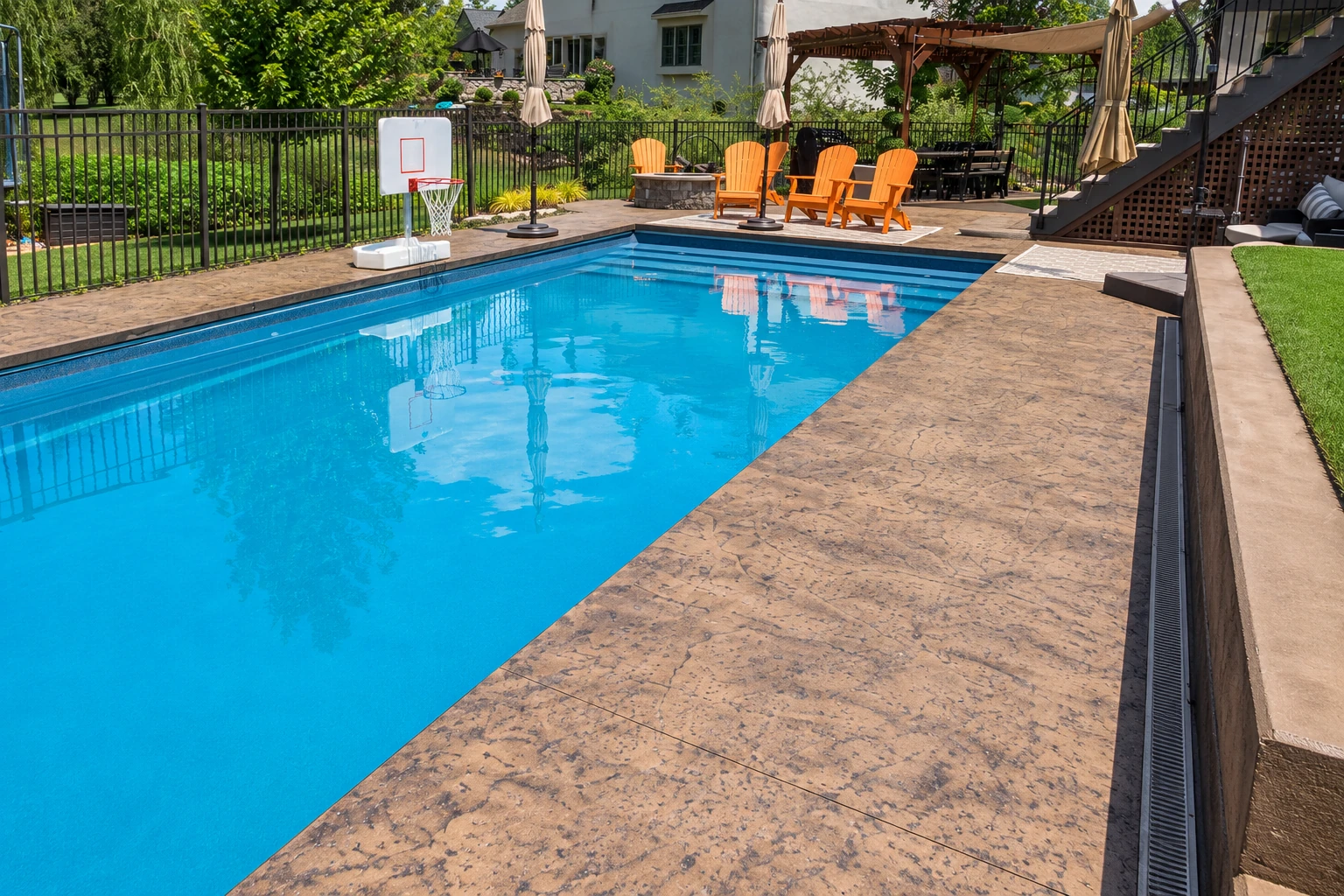
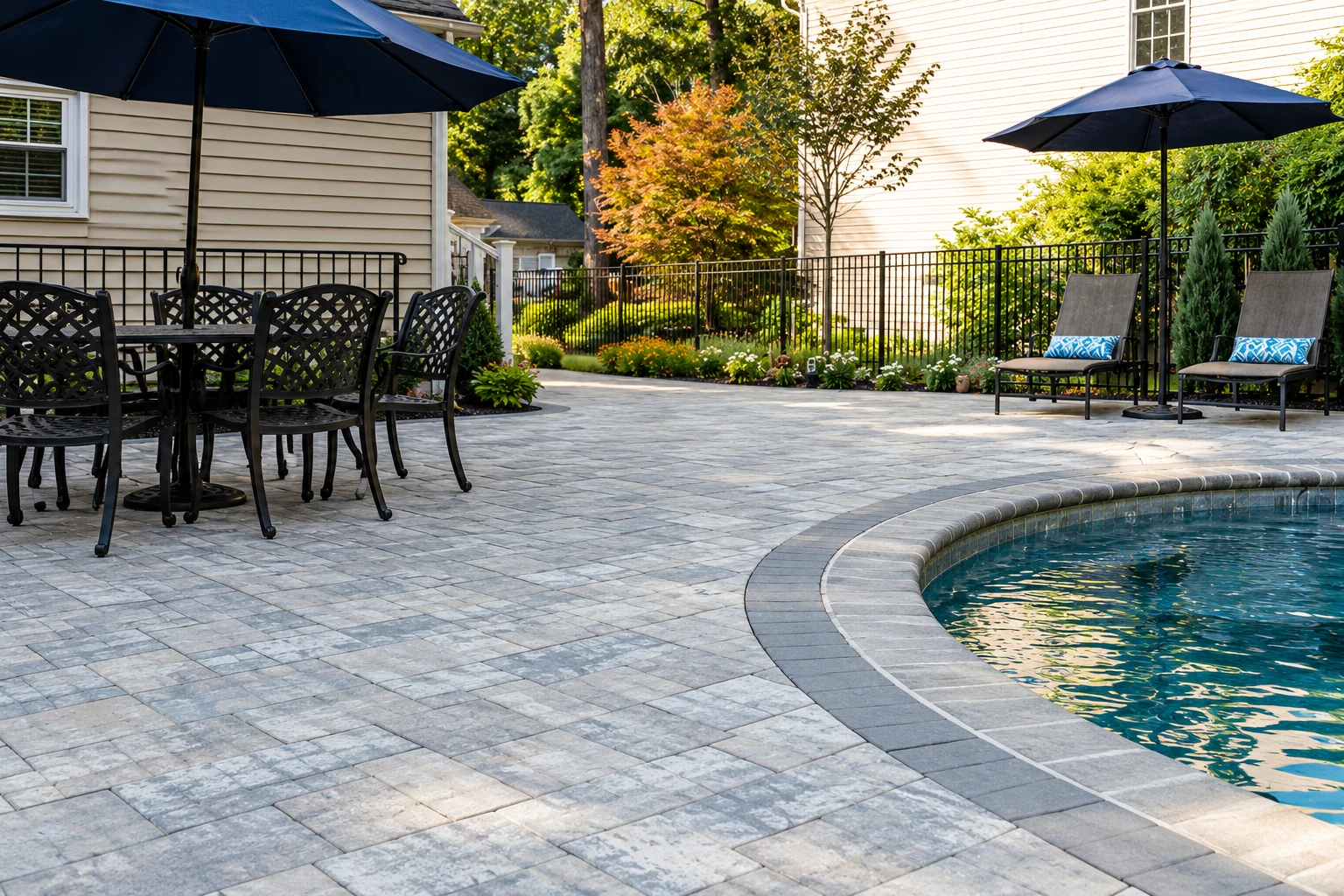
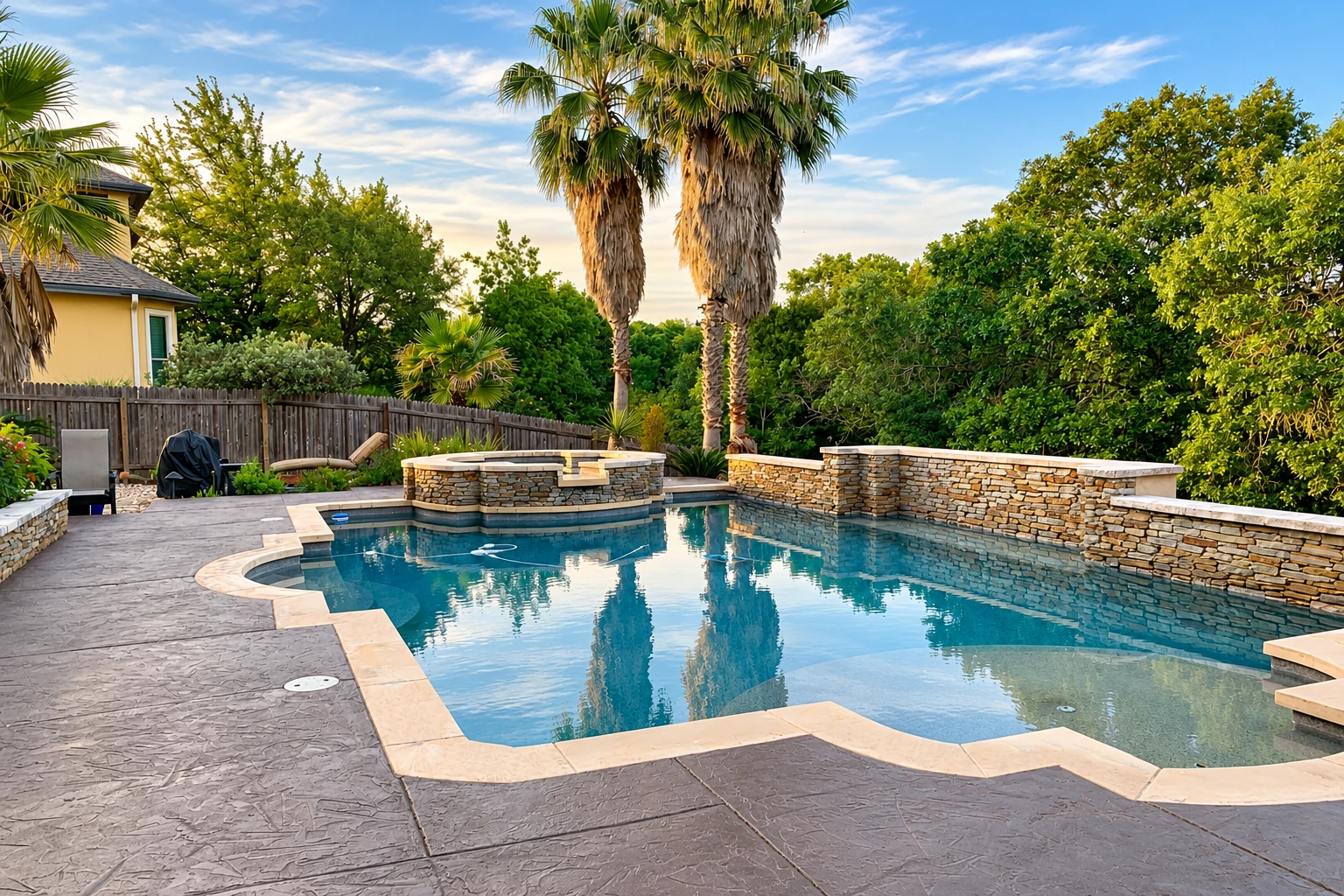
A pool deck needs a surface that stays grippy when wet and slopes away from the water and the house, so we plan the drains and finish before we pour.
Front and back steps take careful forming so every rise is even, and we tie new steps into the walk or porch so they don't pull away from it later.
We pack the ground, set forms and steel, and pour slab foundations for additions, garages and outbuildings, checking the layout with you or your builder before the pour.
We pour foundations for new rooms and outbuildings, working from your plans and checking every measurement so the concrete is square and level before framing starts.
For small businesses, we pour parking areas and drive lanes, with heavier sections where trucks turn and slopes that carry water to the drains instead of leaving puddles.
We dig and pour footings, the concrete base under posts, walls and patio covers, sized to your plans and the load they'll carry so they don't sink.
When a slab or foundation has dropped on one side, we look at why it settled first, then raise it back toward level and deal with the cause.
We saw-cut concrete for new doorways, plumbing trenches and removing a damaged section, keeping the cuts clean and straight so the rest of the slab stays sound.
Send the form or call, and we'll reply within one business day to set a time. I'll come out to measure and talk it through, and the estimate is free with no obligation.
I look at the ground, measure the job and walk it with you, because questions about drainage and old concrete are easiest to answer standing on the spot.
I write each estimate up so you can see what's included, from the digging and base to the steel and finish, before you decide anything.
Our crew does the work, and I'm on site for the pour and the final walkthrough, so the person who looked at your job sees it finished.
Here are the questions people in Franklin ask most about permits, licensing and how a new slab holds up.
Merced County's Building and Safety Division issues permits and does the inspections in Franklin, because it's outside any city. The county's general rule calls for a permit on new construction, repairs and improvements, with exceptions, so ask the division about your job. If one's needed, we'll settle up front whose name it's in, and when it's ours, we file it and book the inspections.
It does once it's over 4 feet high, measured from the bottom of the footing, which is where the county's guide draws the line for concrete, masonry and retaining walls. The footing is the wide base buried under the wall, so a wall can cross that line while looking shorter. County staff also check whether a structure is in a flood zone, which can affect a project.
California's Contractors State License Board requires a license when the project needs a building permit, when employees do the work, or when the labor and materials on its contracts total $1,000 or more. In Franklin, the county also requires a Merced County business license for any business working in its unincorporated areas. We're licensed and insured, and you're welcome to ask us about either.
It can still crack, because concrete shrinks as it hardens, but we work to keep cracks in places we chose. We cut control joints, shallow grooves that give the slab a straight line to crack along, before random cracks can start, and add rebar, steel that holds the slab together, where it's needed. We also time the finishing so the top doesn't turn weak and dusty.
These are the cities with their own page on our site, and we work in many others around Atwater. If yours isn't listed, please call (209) 280-3262 and ask.
We take calls seven days a week until 11 PM, so please call (209) 280-3262 or send the form with a short description of the job.