
Garage and workshop floors
A garage or shop floor takes weight and wear every day, so we put our effort into packing the ground underneath and placing joints where they'll do the most good.
Floor cracked or uneven? We plan the joints, check for moisture from below and time the pour, so you know what you're getting.
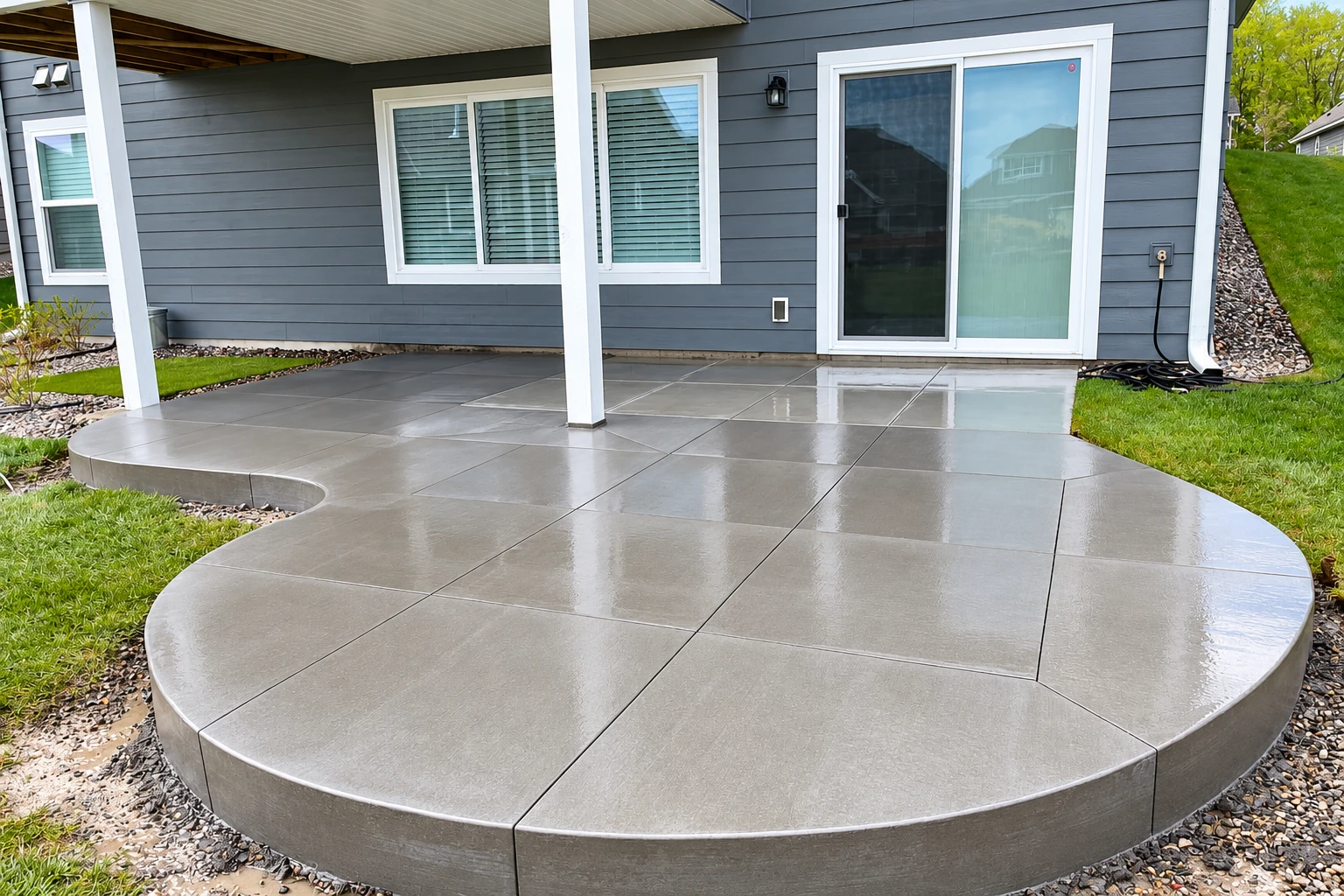
Concrete floor installation in City of Atwater, CA covers two jobs, designing the floor and then building it, and City of Atwater Concrete handles both, from the ground under the slab to the joints and the pour.
Most people call us because an old floor has cracked, settled or stayed damp, or because a garage, shop or new room needs a floor. We're based in Atwater and work in many of the cities around it, and I come out myself to look at the space, measure it and talk it through with you.
The price mostly moves with the size of the floor, whether an old slab has to come out first, how much work the ground underneath needs and whether a layer goes in below to slow moisture. The schedule turns on the weather and on whether your job needs a permit. We're licensed and insured, and if a permit is needed, I'll tell you which office handles it before we set a date.
I come out to look at the job, measure it and talk it through with you, so the person writing your estimate is the same one who'll be there on pour day.
I write each estimate up so you can see what's included, from the ground work to the joints, and ask me about any line of it before you decide.
We're best known for careful flatwork, the flat slabs like driveways, patios, walks and floors, built to sit level and shed water instead of holding it.
It starts with the ground. The subgrade, the soil the slab sits on, gets dug out and packed firm rather than raked level, because a floor poured on loose dirt settles with it and cracks follow. If the budget gets tight, I'd recommend trimming the surface finish before the base, since you can't see the base on day one and you can't fix it later without breaking out the floor.
Next, I ask whether your floor needs a layer underneath to slow moisture coming up from the ground. No one can honestly promise a floor without a single crack, so I also talk through how much cracking or curl is normal and show you where the control joints will go. Those are lines we cut or form in on purpose so the concrete has a planned place to crack as it shrinks, instead of wandering across the middle of the room.
On pour day I'm on site while our crew places and finishes the concrete, and I keep an eye on timing, because a slab worked too late in the heat can end up with a weak, dusty top. When it's done, I walk the floor with you. We bring the same base and joint work to our concrete pool decks and concrete steps, so if your project runs from the floor out to the yard, we can plan it all at once.
A garage or shop floor takes weight and wear every day, so we put our effort into packing the ground underneath and placing joints where they'll do the most good.
When you're adding space, the new floor has to meet the existing house at the right height, so I measure where it ties in before we plan anything else.
If the old floor settled or split across the middle, we look at what's under it before we break it out, because the same ground will carry the new floor too.
Most of our calls come from homeowners, but we also pour floors for small businesses and builders, with the same written estimate and the same care for the ground underneath.
Send the form and we'll reply within one business day to set a time. I'll come out, measure and write up a free estimate with no obligation, so you can see what's included before you decide.
If you can, give us the floor's rough square footage and where it sits on the property, so I know what to look at when I come out.
Let us know if an old slab has to come out or the floor will be covered later, because both change the work underneath and the price.
Please call (209) 280-3262 any day from 7 AM to 11 PM. You can describe the job by phone, and we'll set a time for me to see it.
Example photos of concrete floors, joint patterns and related flatwork, to help you point out what you like when we meet on site.
Here are plain answers to what homeowners ask us most about a new concrete floor, from cracking and cost to permits and licensing.
Some cracking or curl is normal, even on a floor that's well designed and well built. A leading concrete floor guide says no floor is completely free of either, and cracks can't be stopped entirely, but properly planned joints control them and keep them small. That's why I show you the joint layout and what to expect before we start.
A 4-inch concrete slab in the Central Valley usually costs about $9 to $13 per square foot installed. That's the going rate in the area, not our quote. Where your floor lands depends on the things above, like removal, ground work and a moisture layer, and my free estimate puts your number in writing.
The City of Atwater Building Division issues building permits and takes submittals, plan reviews and payments online through Cloudpermit. The division reviews plans and inspects work in the field, so ask it whether your floor needs a permit. The permit holder, either the licensed contractor or the owner, is responsible for the work, so we settle whose name it's in first. When it's ours, we file and book the inspections.
Under the state licensing board's rule, you need a licensed contractor unless the job is minor work under $1,000 that needs no permit, done by someone with no employees on the project. That limit used to be $500. If the work goes past it or needs a permit, the person doing it has to be licensed. We're licensed and insured.
Yes, but the timing matters. Atwater's climate is semiarid, with hot, dry summers and cool, moist winters, and a hot weather concrete bulletin from the national home builders' group recommends pouring in cooler parts of the day, such as at night. In summer that can mean a pour outside normal daytime hours, and I'll talk the timing through with you.
Call (209) 280-3262 or send the form, since an early look leaves time to sort out any permit before your pour is scheduled.