Concrete driveway building
We break out the old driveway, dig out loose dirt and pack a new base, then set rebar, steel that holds the slab together, so it carries your car's weight.
City of Atwater Concrete is a concrete contractor based just south of Winton, CA. We build driveways, patios, walks, slabs and garage floors for Winton homes, on a dug-out, packed base so the work stays level and sheds water.
Winton sits just north of Atwater, where we're based, and about five miles southeast of Livingston, so it's close to home for our crew. Because Winton is unincorporated, Merced County's rules apply to your job rather than a city's, and I've answered the common permit and license questions further down.
On Winton jobs we see what we see across the area: driveways that have sunk at one corner, patios where water stands against the back wall, and cracks wandering across slabs whose control joints, the grooves cut so a slab cracks where we choose, came late or never. Each of those usually starts under or around the slab, not on top, which is why the points below are where I'd put your money.
What moves the price is mostly the size and thickness of the slab, how much old concrete we break out and haul away, how much base work the ground needs, and the finish, since a plain broom finish, the light texture dragged across for grip, costs less than stamped or colored work. The schedule turns on that same demolition and base work, then on curing, the wait while fresh concrete gains strength, and you'll stay off a new driveway longer than a walk because it has to carry your car. Your estimate gives you the figure for your own job.
Winton homes get water and sewer service from the local district, and those lines often run under a driveway or walk, so we find them before we dig.
Before we set the forms, the boards that shape the slab, we watch where water goes on your lot, because a slab sloping toward the house sends water against your foundation.
The ground under a slab is hidden by pour day, so it's tempting to cut first from the budget. I'd recommend keeping it, because a nice finish can't fix a base that settles.
We break out the old driveway, dig out loose dirt and pack a new base, then set rebar, steel that holds the slab together, so it carries your car's weight.
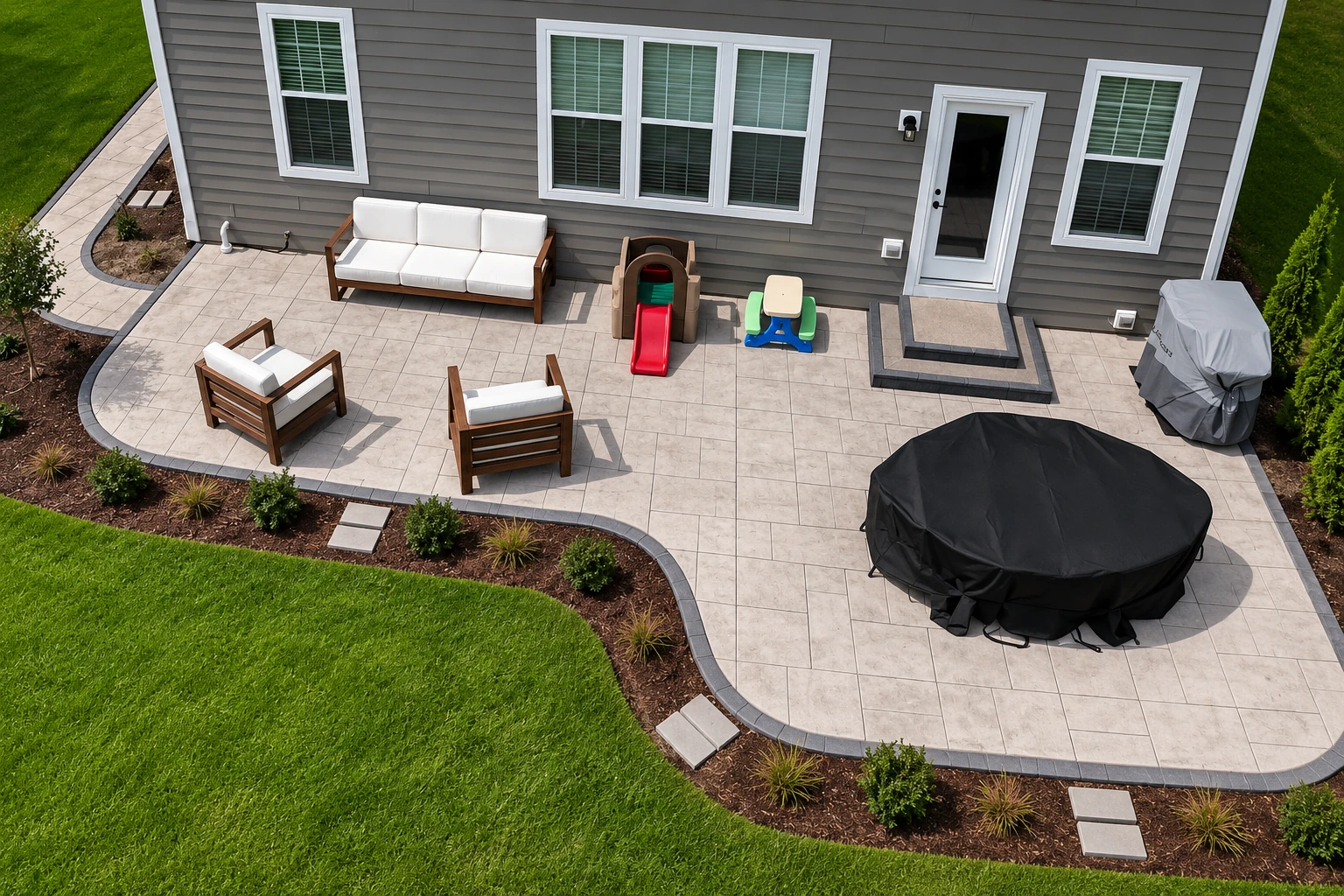
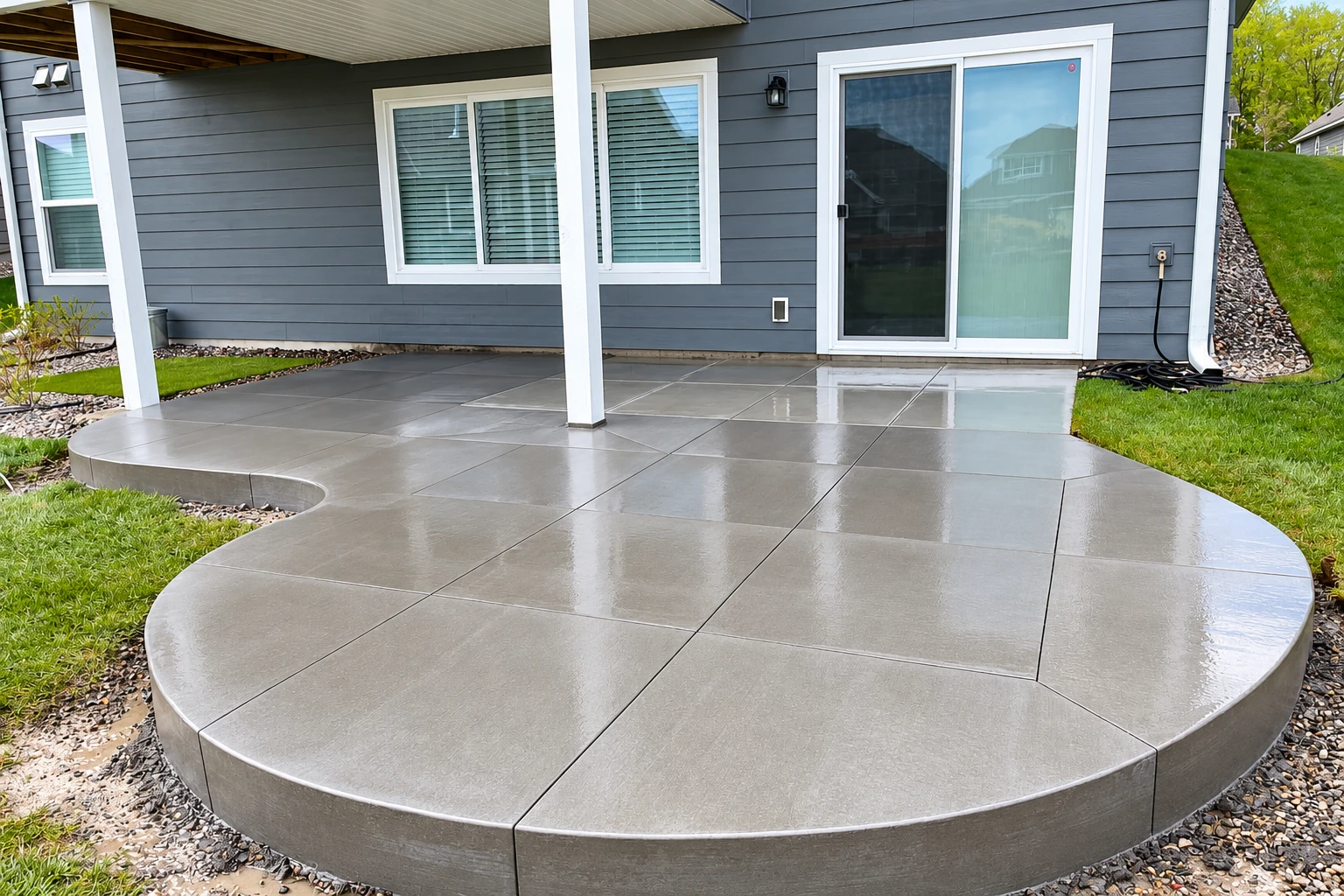
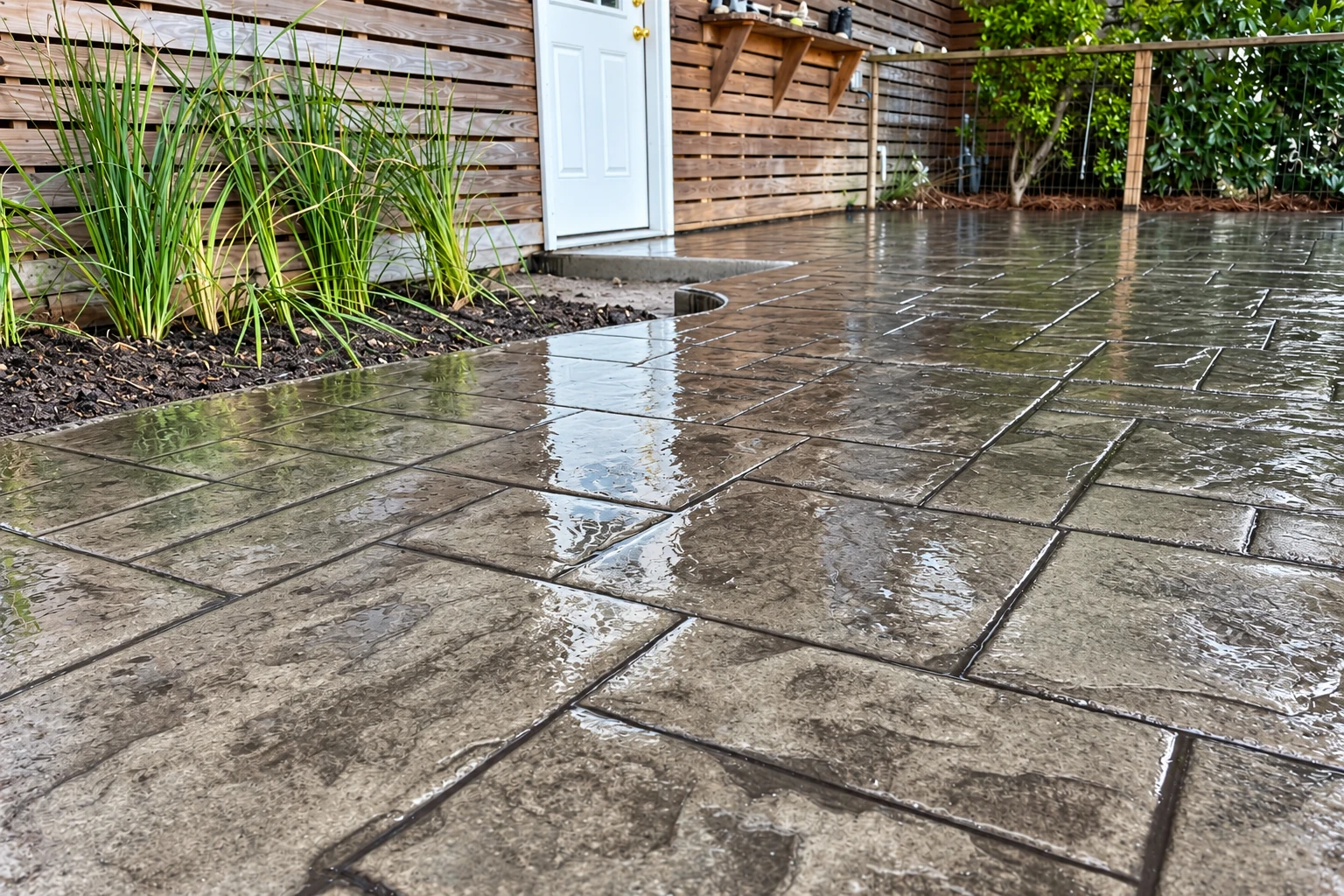
We slope each patio so water runs away from your house instead of pooling by the back door, then finish it to suit how you'll use it, from barbecues to bare feet.
Stamped concrete is pressed with a stone or brick pattern while it's soft. We pour it on a packed base like any slab, because a pattern won't hide one that settles.
We rebuild front walks and side paths that have lifted or cracked into trip edges, setting the slope so they drain and cutting joints on time so any cracking follows the grooves.
We pour garage floors thick enough for cars and a workbench, with a smooth finish that sweeps clean and a slight fall toward the door so spills run out.
Colored and stained concrete, or exposed aggregate, where the top is washed back to show the stone, can give a walk or patio more character than plain gray.
A retaining wall holds back soil where your yard changes level. We set it on a footing, the wide concrete base under it, and give water behind it a way out.
We pour interior concrete floors for shops, additions and outbuildings, checking the subgrade, the packed ground the slab sits on, so the floor stays flat under shelving and foot traffic.
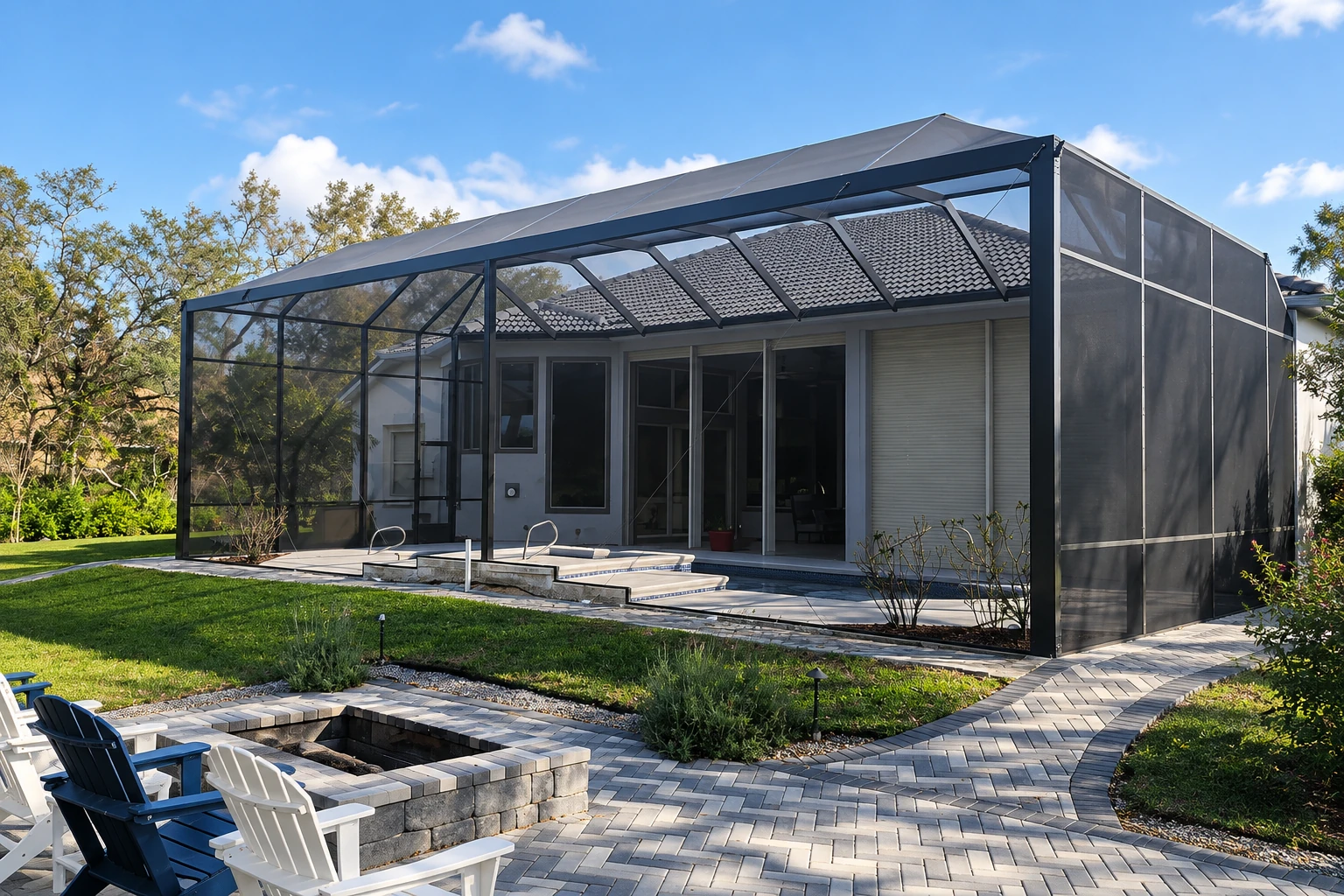
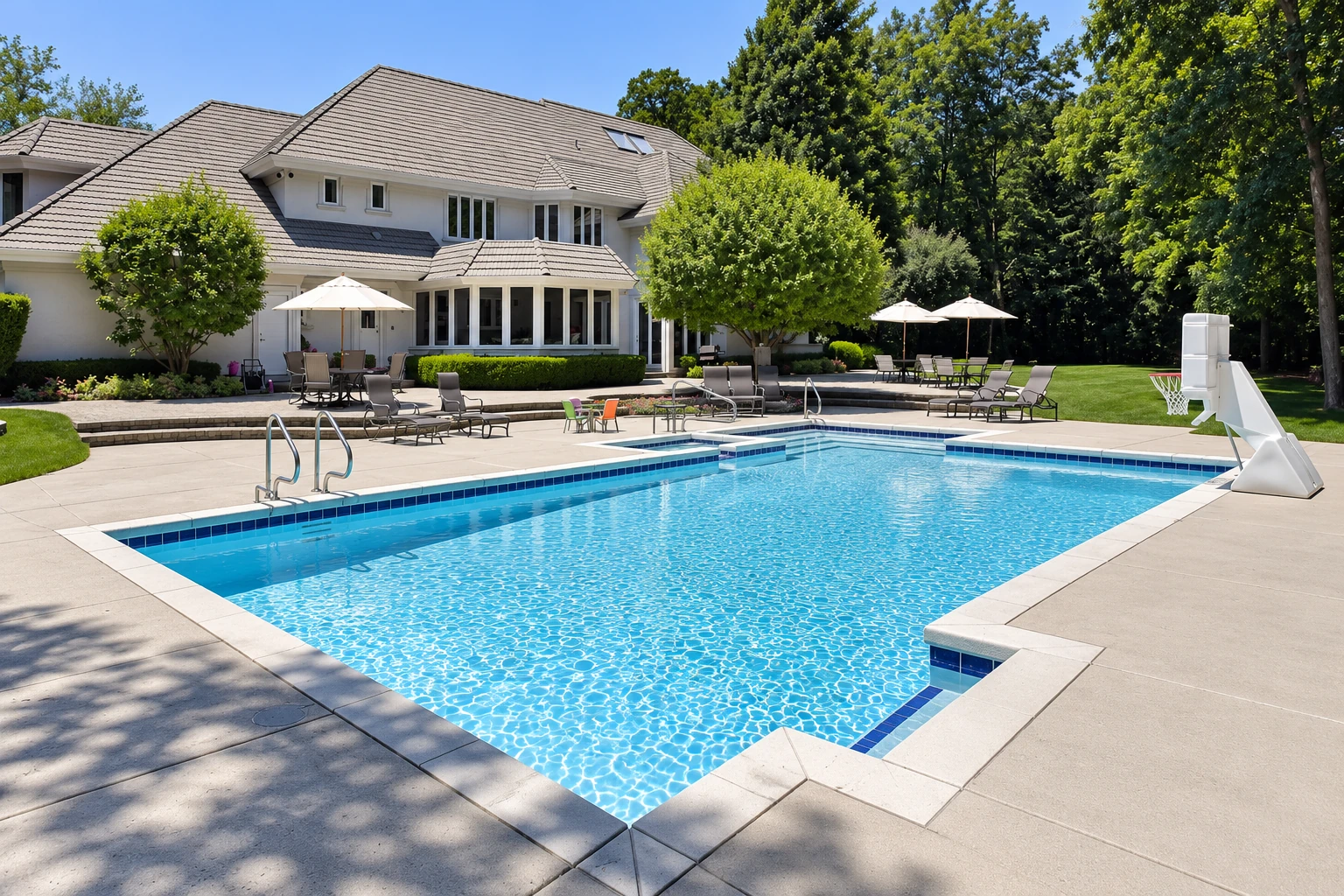
We pour pool decks with a textured finish that gives wet feet some grip, sloped so splash water drains off the deck instead of back into the pool.
We build steps with even rises so nobody misjudges one, a broom-finished top for grip when wet, and a packed base so they don't pull away from the door.
We form and pour slab foundations for additions, garages and new homes, with the ground dug out and packed first, because nobody redoes a slab once a building sits on it.
We build perimeter foundations and stem walls, the short concrete walls a wood frame sits on, set to the plans so the framing crew starts on something square and level.
For small businesses, we pour parking areas and aprons thicker than a home driveway so they carry delivery trucks, with the slope set so water runs off the lot.
Footings are the buried concrete pads and strips that spread a load into the ground. We dig and pour them for patio covers, walls and additions, sized to your plans.
When a house or slab has settled, we lift it back toward level and fill the gap beneath, after I've looked at what caused it, since that decides the fix.
We saw-cut concrete for utility trenches, new openings and partial driveway replacements, so the edge is clean and straight and the concrete you're keeping isn't cracked by a jackhammer.
Send the form and we'll reply within one business day. Your estimate is free and done on site, and I write it up so you can see what's included, with no obligation to go ahead.
I come out myself to look at the job, measure it and talk it through with you. Our crew does the work, and I'm on site for the pours and the final walkthrough.
If your job needs a permit, I'll tell you which county office handles it and we'll agree whose name it's in. When it's ours, we file it and book the inspections.
I started this business in Atwater in 2013 after learning from the finishers I worked under. We're best known for flatwork, the driveways, patios and walks that sit level and shed water.
Here are plain answers on permits and licenses for concrete work in Winton, where county rules apply instead of a city's.
Merced County's Building and Safety Division issues building permits in Winton, because the community is unincorporated. It issues them for new construction, additions, alterations, repairs and demolition, though the county's guide calls that a rule of thumb with exceptions for minor repairs. With a few exceptions, state law lets only the property owner or a licensed contractor pull the permit, so it'll be in your name or ours.
It does once it's over 4 feet high, measured from the bottom of the footing, according to the county's permit guide, and the same goes for any masonry or concrete wall that tall. Because the footing counts toward the height, a wall that looks shorter from the yard can still pass that mark. I'll go over the planned height with you at the estimate.
Yes, if the job needs a building permit, uses employee labor or costs $1,000 or more in labor and materials, because the Contractors State License Board licenses anyone who builds or alters a structure in California. A home improvement contractor has to hold that license before bidding, so it's fair to ask about it before you take a bid. We're licensed and insured.
Yes, every business located in or doing business in unincorporated Merced County, which includes Winton, has to apply for and get a county business license. That's separate from the state contractor license, so it's worth asking about both before you hire anyone for your driveway or patio.
Below are the cities with their own page on our site. We work in many of the cities around Atwater, so if you don't see yours, please call and ask.
We're open seven days a week, 7 AM to 11 PM, so please call (209) 280-3262 after work or send the form anytime.