Replacing a cracked or sinking driveway
When the old slab has cracked, sunk or started chipping, we break it out and haul it away, then look at what's underneath so we can fix what made the old one fail.
If your driveway is cracked, sinking or holding water, we'll prepare the ground and pour a new slab that drains away from your house.
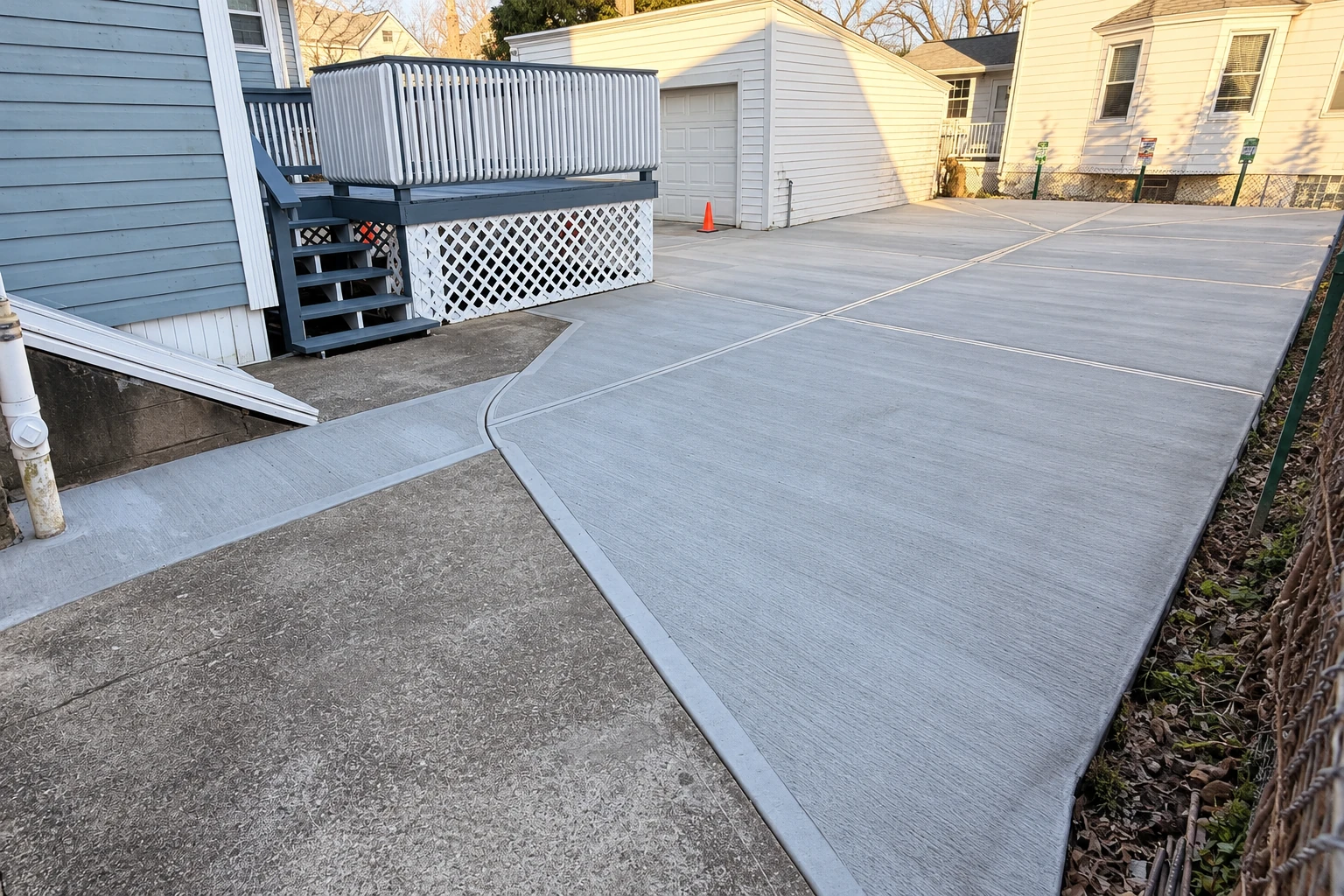
Concrete driveway building in City of Atwater, CA means forming, pouring and finishing a new driveway, so you end up with a level slab that sheds water and takes daily parking once it has cured.
Most people call us when the old driveway has cracked, sunk at one edge, started chipping or holds water after a rain. Usually that trouble starts underneath, with ground that settled or water that ran the wrong way, which is why I look at more than the surface.
The price mostly turns on the size of the driveway, whether old concrete has to be broken out and hauled off, how much ground work it needs and how easily the trucks can reach it. The schedule turns on the weather on pour day, the wait before you can drive on it and, when work reaches into the City right of way, a permit. I come out, measure and write it all up so you can see what's included before you decide.
I come out to look, measure and talk it through with you, and I'm on site for the pours and the final walkthrough, so the person who quoted it is there when it counts.
If your job needs a permit, we'll tell you which city or county office handles it and agree with you whose name it's in. When it's in ours, we file and book the inspections.
We're licensed and insured and have been in business since 2013, building flatwork, the driveways, patios and walks that sit level and shed water, which is what we're best known for.
A driveway takes a beating, so before we leave I'll go over when it's ready for your car and when it's ready for anything heavier. I'd rather you park on the street a while longer than see tire marks in new concrete. Getting there starts well before the truck shows up, with the ground the slab will sit on.
We dig out the old slab or the soil, check where the water runs so the new driveway falls away from your house and not toward it, and prepare the subgrade, the ground the slab rests on. The soil series named for Atwater is described as very deep and well drained, with sandy loam to loamy sand in the lower layers that can sit over weakly hardened sediment or a silica-cemented hardpan, so I like to see what's under your yard once it's open. If the budget has to come down, I'd recommend trimming something you can see rather than the ground work, because that's the part you can't fix later.
Hot weather can cause problems in delivering, mixing, placing and curing concrete, and those problems can hurt how the slab performs, which matters here because our summers are hot and dry. I'd rather pour in the cooler hours than in midday heat, which can leave a weak, dusty top, and our crew keeps the slab from drying out too fast while it cures, the wait while it gains strength. We cut control joints, straight lines that give the concrete a planned place to crack, and we cut them on time so cracks don't wander where nobody chose. If you're also thinking about a concrete patio out back or a pattern pressed in with stamped concrete, please mention it when I come out, since planning the pieces together keeps the slopes and joints lined up. We do the same work in many of the cities around Atwater, such as Winton, Livingston and Merced.
When the old slab has cracked, sunk or started chipping, we break it out and haul it away, then look at what's underneath so we can fix what made the old one fail.
If rain sits on your driveway or runs toward the garage, we set the new slab to fall away from the house, so the water heads for the street or the yard instead.
Adding room beside the driveway for a second car or a trailer means joining new concrete to old. I'll look at how the two meet and where the joints should go.
Some of our calls come from builders and small businesses who need a driveway on a new lot. The same ground work and pour planning apply, whoever owns the property.
Send the form and we'll reply within one business day to set a time for me to come out and measure. The estimate is free, written up so you see what's included, and carries no obligation.
A rough length and width, even paced off, helps me plan the visit. I'll take exact measurements on site, so a guess is perfectly fine for now.
The address lets me look at how the driveway meets the street before I arrive, and whether any of the work might reach into the City right of way.
Please tell us if you're seeing cracks, sinking, chipping or pooling water, because the sign usually points to the cause, and that shapes what I'll look for.
These photos show driveway layouts, edges and surface textures you can point to when we talk through what fits your house and street.
Plain answers on price, the wait before you drive, summer pours, permits and licensing for a new driveway in Atwater.
A standard 4-inch concrete slab, installed with materials, labor and a basic broom finish, the light texture that gives tires grip, usually costs about $9 to $14 per square foot in the Central Valley. That's the going rate in the area, not our price. Your own figure comes from the measurements I take on site.
One curing guide says to wait at least 7 days before driving on a new driveway, and ideally 28 days for full strength before heavy or repeated loads. Plan somewhere else to park for that first week, and longer for a truck or trailer. Before we leave, I'll tell you when your slab is ready, and I'd ask you to go by that.
Usually, yes. A curing guide recommends at least 7 days of moist curing, extending to 10 to 14 days in hot or windy conditions, and our summers run hot and dry. Keeping the slab moist through that wait helps it gain strength, so please follow the crew's instructions for your slab rather than a general chart.
Yes, in most cases. California requires a state contractor license when a project needs a building permit, uses any additional workers, or costs $1,000 or more in labor and materials. The Contractors State License Board licenses contractors, and its C-8 Concrete Contractor class covers pavement and flat concrete work. City of Atwater Concrete is licensed and insured.
The city's Engineering Division issues encroachment permits, and the city's encroachment permit application covers work to excavate, construct or otherwise encroach on the City right of way. Whether your driveway work reaches into it is something I'll look at on site. If it does, we'll agree on who files before we start.
Call (209) 280-3262 any day from 7 AM to 11 PM, or send the form, and we'll set a time for me to come out.