A table off the back door
A slab right outside the back door gives you firm, flat footing for a table and chairs, and it keeps dirt and mud from following everyone back into the house.
If your yard is bare dirt or an old slab that's cracked and sinking, we'll pour a patio on packed ground so it sits level.
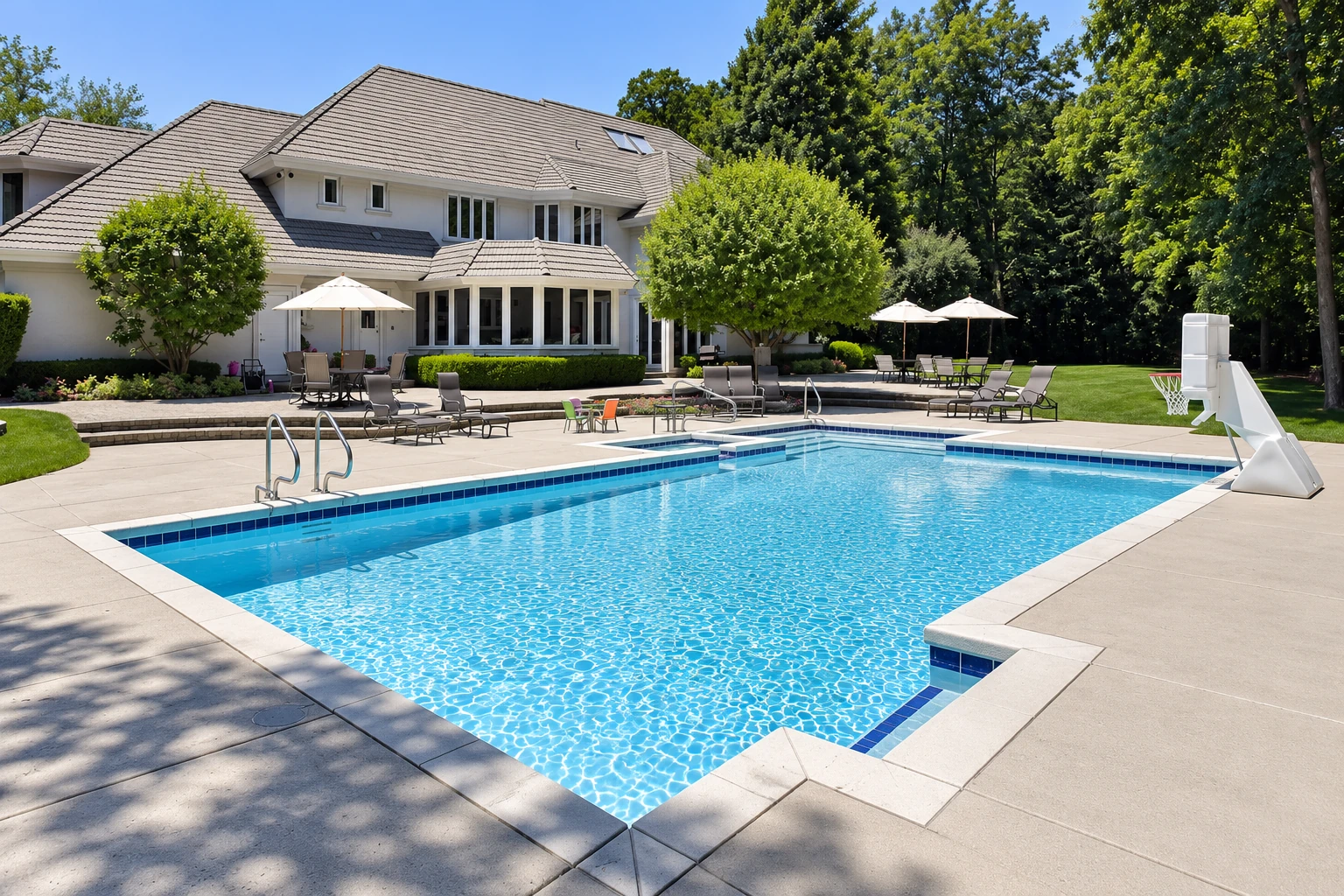
Concrete patio construction in Atwater means building a new slab in your yard on ground that's been dug out and packed evenly, so the patio sits level, sheds water and doesn't settle or come out thinner in some spots than others.
Most patio calls start with bare dirt off the back door, or an old slab that's cracked, sinking or holding water after the sprinklers run. Either way, what you want is flat ground you can set a table on, with the water running off it and away from the house.
The price moves mostly with the size of the patio, whether an old slab has to be broken out and hauled away, how much digging and packing the ground needs, and the finish you choose. The schedule turns on the weather and on the days after the pour, when the slab has to be left alone to cure, which is the slow hardening that gives concrete its strength. I write each estimate up so you can see what's included before you decide.
Since 2013, most of our work has been driveways, patios and walks that sit level and shed water, so a plain patio is exactly the kind of job we know best.
Our crew does the work, and I'm on site for the pours and the final walkthrough, so the person who measured your patio is there for the parts that matter most.
We're licensed and insured, which matters when a crew and a concrete truck are working in your back yard. Our promise to you is a plain one. Your satisfaction, guaranteed.
Before anything is poured, we dig out the soft dirt and pack the subgrade, the ground the slab rests on, evenly across the whole patio. A slab poured on dirt that was only raked level settles as that dirt settles, and that's the most common reason an old patio cracks, sinks or tips. We also check where the water runs, so the finished slab falls away from your house and not toward it.
Most of the choice on a patio is the surface, so I'll show you a broom finish, a light texture dragged across the top for grip, next to a smoother hand finish and help you pick what suits how you'll use the space. If the budget gets tight, I'd recommend saving on the finish before the ground work, because nobody sees the base on day one, but it decides how the patio holds up for years. If you'd like a pattern pressed into the surface instead, that's stamped concrete, and a path out to the patio can be planned along with it as a concrete sidewalk.
Summers in Atwater are hot and dry, and that matters on pour day. A builders' association guide on hot weather concrete says to place concrete during the cooler part of the day, such as at night. Midday heat dries the top too fast and can leave it weak and dusty later, so it's worth planning your pour date with the heat in mind.
A slab right outside the back door gives you firm, flat footing for a table and chairs, and it keeps dirt and mud from following everyone back into the house.
If your old patio has cracked, sunk or tipped toward the house, we break it out and start again on packed ground, because pouring new concrete over a moving slab only copies its problems.
Plenty of owners here want shade over the patio, so we talk through where a cover's posts might go at the estimate, before anything is laid out or poured.
A smaller slab by the fence or the garden gives a grill, a fire pit or a couple of chairs a level spot, and it keeps winter foot traffic off a wet lawn.
Send the form and we'll reply within one business day to set a time. I'll come out, measure your patio and talk it through, then write up a free estimate with no obligation.
I price a patio after I've seen your yard, because the slope, any old slab that has to come out and where the water runs all change the work.
I'd like you to know what you're getting before we start, so I explain the reason behind each step and answer your questions as plainly as I can.
We're based in Atwater and work in many of the cities around it, including Winton, Merced and Livingston. If you don't see your city listed, please call and ask.
These photos show broom, smooth and patterned surfaces and a few patio shapes, so you have something to point to when we talk.
These are the questions homeowners usually ask before a new patio goes in, about price, cracks, finishes and permits.
A standard 4-inch concrete slab in Sacramento and the Central Valley usually runs about $9 to $14 per square foot installed, covering materials, labor and a basic broom finish. That's the going rate in the area, not our price. Breaking out an old slab, extra ground work or a smoother finish can move it, and your written estimate shows your own figure.
One ready-mix trade group's guide says to keep foot and vehicle traffic off new concrete for 7 days, so plan on about a week before the furniture goes back and guests come over. That wait gives the slab time to cure, and the same guide has crews spray or roll on a curing compound to help it along.
Any slab can crack as it shrinks, so the goal is to choose where, and joints do that. One ready-mix trade group's guide says joints are saw-cut or formed in slabs when needed to minimize random cracking. Control joints, the straight grooves across a slab, give a crack a planned place to go, and packed ground underneath helps keep the slab from settling.
Pick a smooth hand finish if you want the surface smooth underfoot, and a broom finish if you'd rather have the light texture. One concrete supplier's guide says the broom finish is used most often, mainly on driveways and walks, while a hand float finish suits patios where a smooth surface is wanted. Seeing the two side by side usually settles it.
It may need one, and the city's Building Division is the place to find out, since it issues building permits and handles submittals, plan reviews and payments online. If your patio needs a permit, we'll tell you so and settle with you up front whose name it's in. When it's in ours, we take care of the filing and book the inspections.
Yes, once a job goes past a small dollar amount. A March 2024 presentation from the state license board said an unlicensed person may take a construction contract only where material and labor don't exceed $500, and a bill it described would change that amount to $5,000. We're licensed and insured, so that's one question you can set aside.
Have the rough size, the finish you're leaning toward and a target date handy, and we can set up your estimate on the first call.