Concrete driveway building
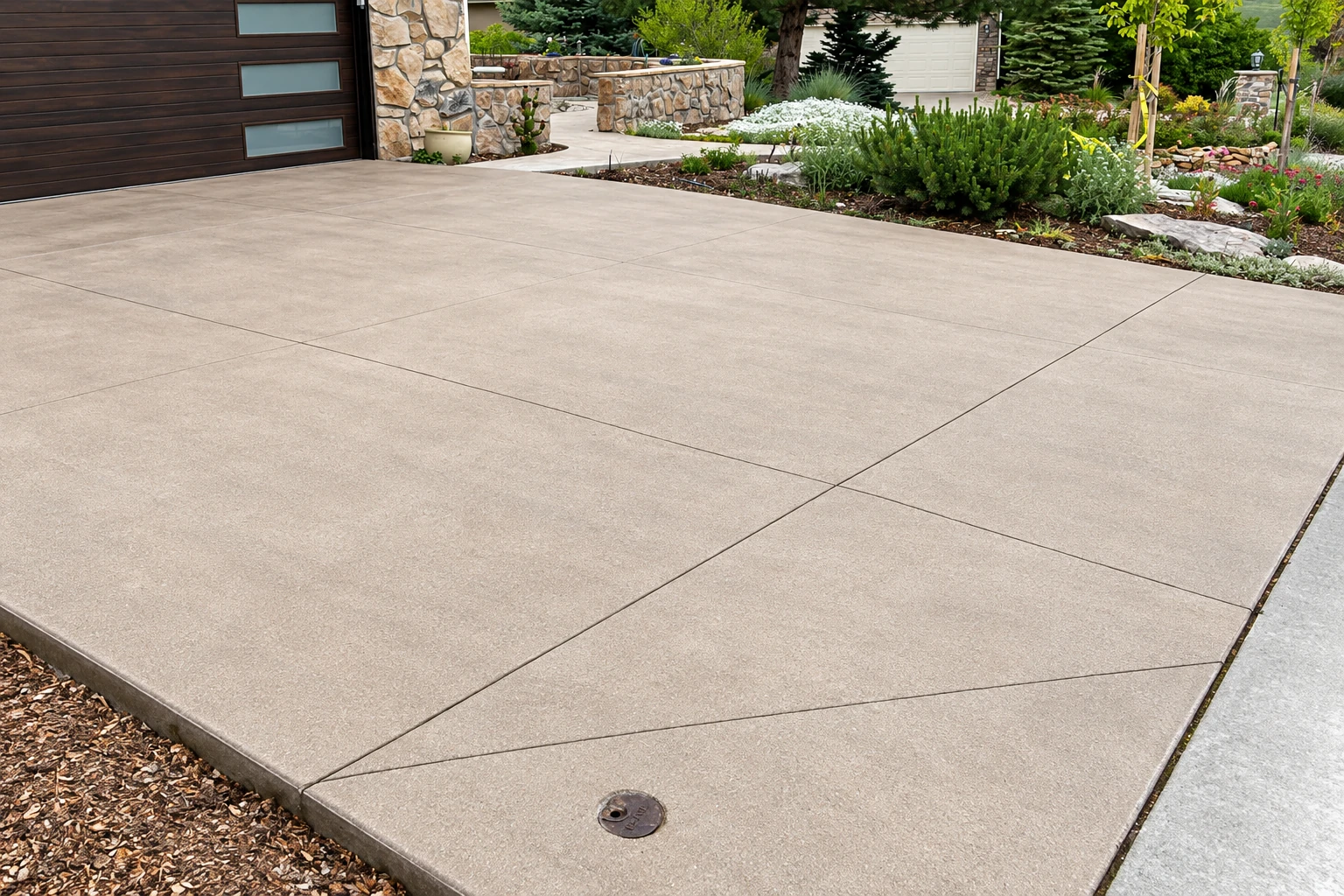
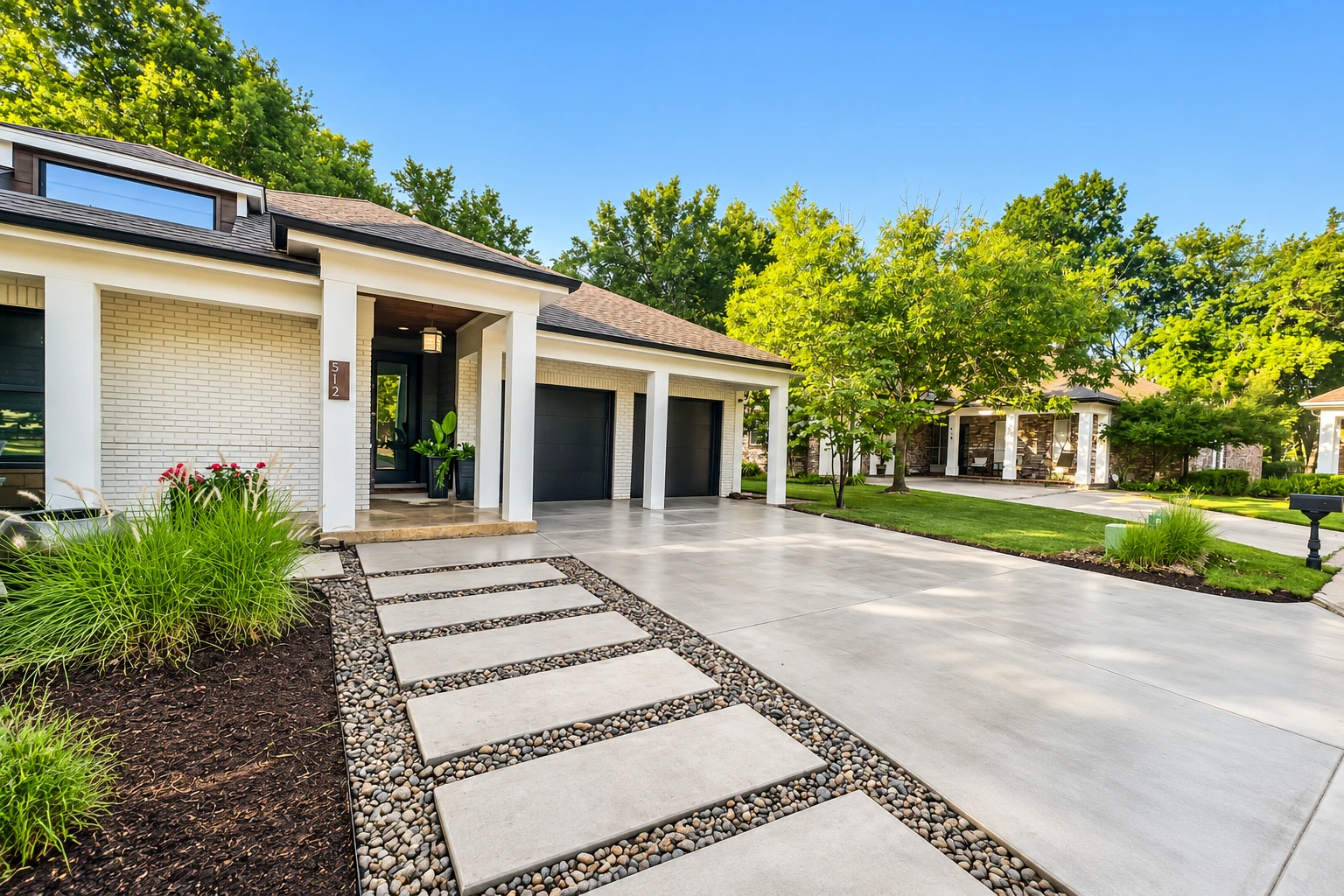
We break out the old driveway, pack a firm subgrade, the ground the slab sits on, and set rebar, steel that ties the slab together, before we pour the new one.
City of Atwater Concrete pours driveways, patios, walks, garage floors and foundations for homes and small businesses in Merced, CA, and we build each slab from the ground up, starting with the base under it.
Most of our calls from Merced are for flatwork, the driveways, patios and walks that lie on the ground. Most of them start the same way, with a slab that has sunk at a corner, cracked across the middle or holds a puddle after rain. We're a concrete contractor based in City of Atwater, CA and do the same work in Turlock, and I come out myself to look at every Merced job before we price it.
The price turns on the size of the area, how thick the slab needs to be for what it carries, how much old concrete has to come out and how much work the ground needs. The finish matters too, since a stamped or colored surface takes more labor than a plain broom finish, the light ridged texture that gives your feet and tires grip. The schedule turns on whether a permit is needed, the weather on pour day and curing, the wait while the concrete hardens before you use it. Your own figure comes in the written estimate, which lists what's included.
The city's 2022 design criteria for building plans list a winter design temperature of 25 degrees F and rate weathering as negligible, so hard freezes aren't what wears slabs out here. What does is the ground under the slab, where the water runs and summer heat on pour day, which can leave a weak, dusty top, so we'd rather start pours in the cool of the morning.
Work on city easements or right-of-way, such as the stretch of driveway, curb or sidewalk by the street, needs a public works encroachment permit from the city, so we sort that out at the estimate.
The base is buried on day one and it's the first thing people want to cut. I'd recommend keeping it, because a slab only sits as level as the ground packed under it.
Before we set forms, we look at where your yard sends water. That way a new patio or driveway falls away from the house instead of sending rain back toward your foundation.
We break out the old driveway, pack a firm subgrade, the ground the slab sits on, and set rebar, steel that ties the slab together, before we pour the new one.
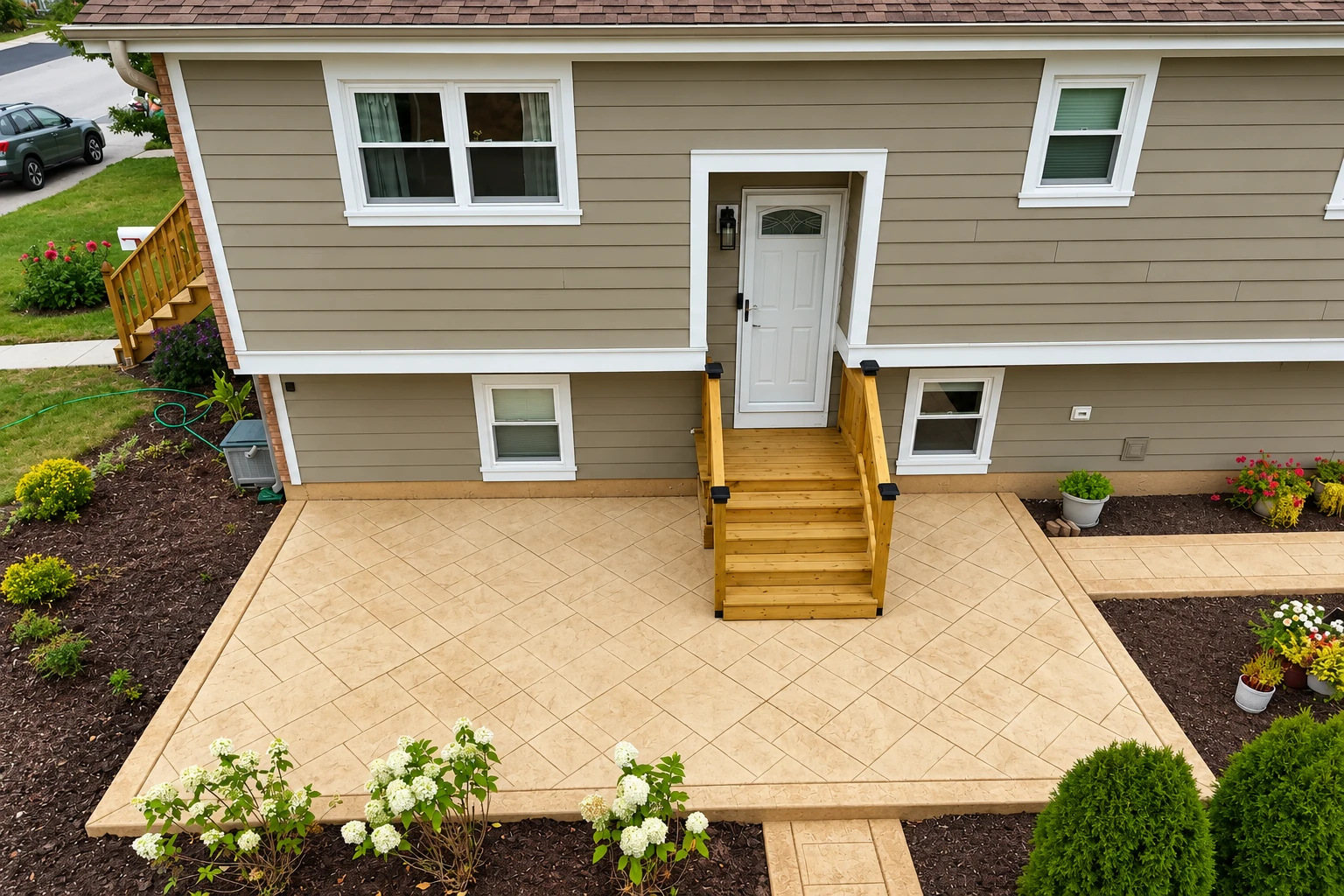
We set each patio with a gentle fall away from the house so rain and hose water run off, then finish it to suit how you'll use the space.
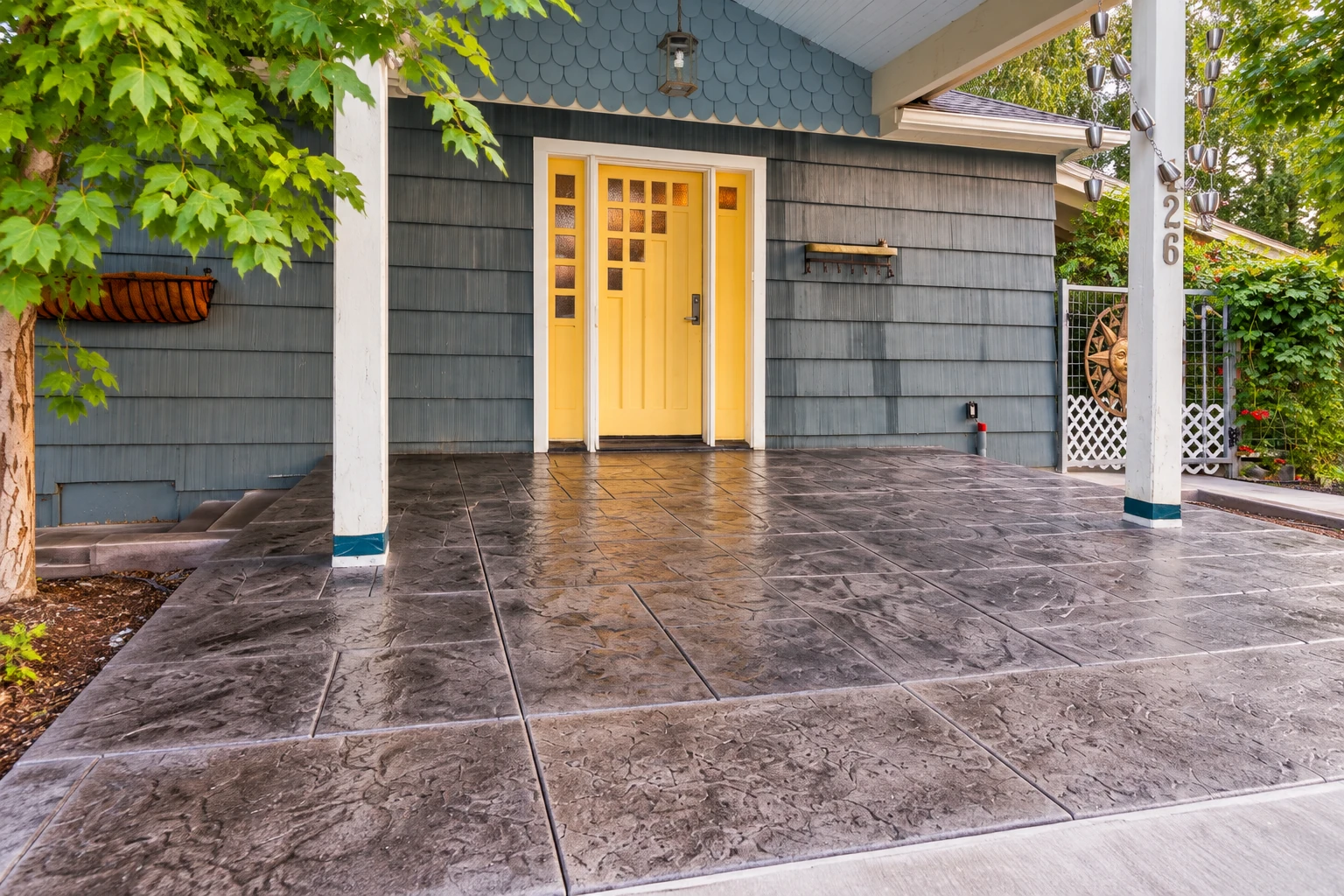
Stamped concrete gives a patio or walk the look of stone or brick. We press the pattern while the surface is still soft, so timing on pour day matters most.
We replace front walks and side paths that have lifted or sunk, and we cut control joints, planned grooves that give the slab a place to crack out of sight.
We pour garage floors on a packed base with a smooth trowel finish that sweeps clean, then give them time to cure before you park, so the surface comes out hard.
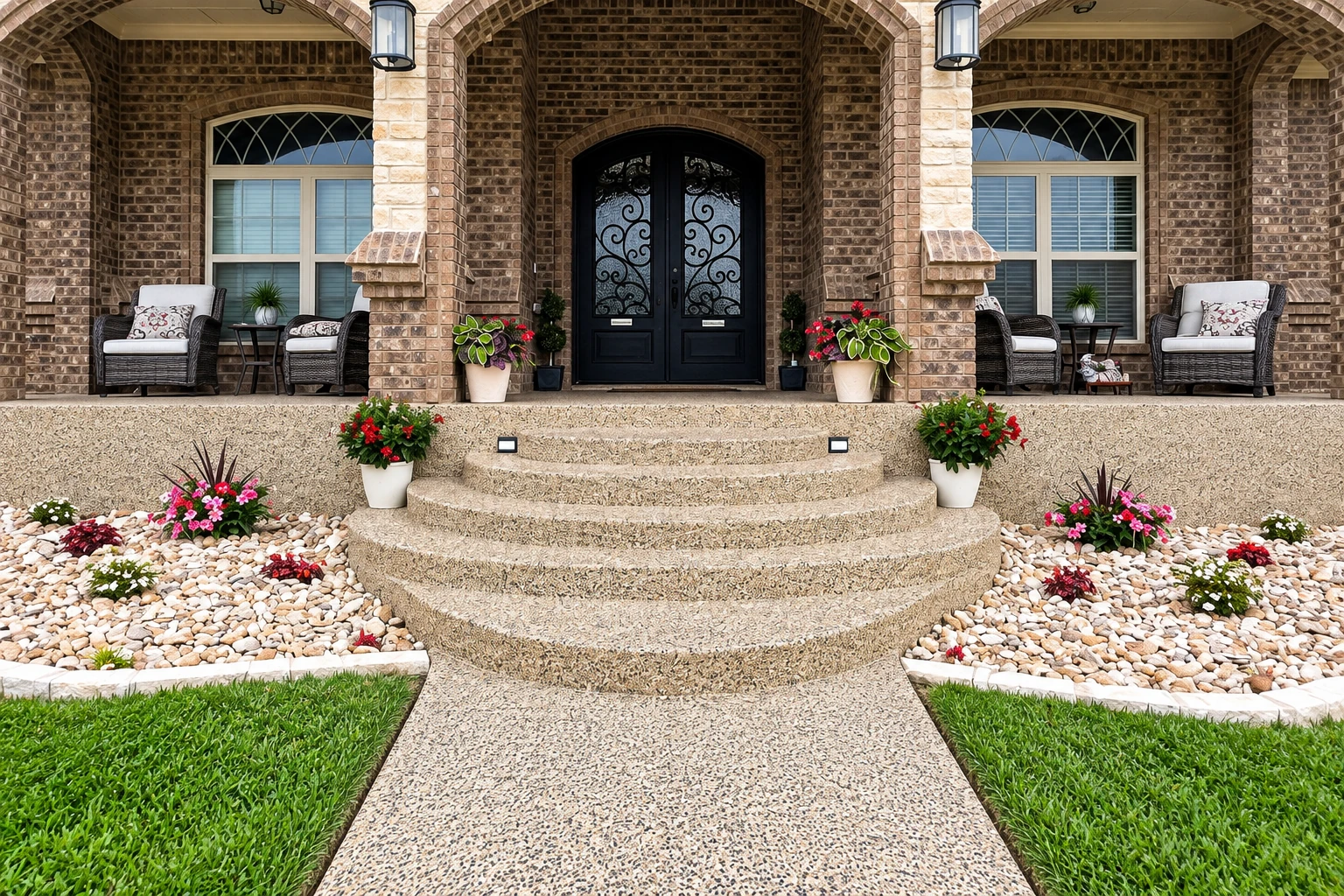
Decorative work covers color, exposed stone and borders on driveways, patios and walks. I'd recommend it where people see it most, like the front entry or the main patio.
Where a yard steps down or a slope presses on a patio, we build reinforced concrete walls with drainage behind them, because trapped water is what pushes walls over.
We pour interior slabs for shops, additions and storage buildings, flat enough for the use you have in mind and finished smooth or textured to suit it.
Pool decks need grip and good drainage away from the water's edge, so we slope them carefully and give them a textured finish that's easier on bare feet.
We form and pour front and back steps with even risers, so every step is the same height, and a textured tread that gives better footing when it's wet.
For garages, additions and outbuildings, we pour slab foundations on a dug-out, compacted base, with the steel and thickness the plans call for.
We build foundations for new structures and additions to the plans you have, from layout and digging through the steel and the pour, and I'm on site for the pours.
For small businesses, we pour parking areas thick enough for the traffic they'll get, sloped so rain runs to the drains instead of standing in the lot.
We dig and pour footings, the wide concrete base under a wall, post or porch, sized to the plans so the weight spreads into firm ground.
When part of a slab or foundation has dropped, we look at why it settled first, then talk through raising it, because lifting it without fixing the cause rarely lasts.
We saw-cut old concrete for removal, openings and repairs, and we cut clean lines where a new driveway or walk meets the concrete that's staying, so the seam looks tidy.
Send the form and we'll reply within one business day to set a time. I'll come out to measure and talk it through, then write up a free estimate with no obligation.
I look at the job myself, measure it and walk the yard with you, so the estimate fits your ground and not a guess made over the phone.
Each estimate lists what's included, so you can see what you're getting and compare it fairly before you decide anything.
If your job needs a permit, we'll tell you which city or county office handles it and agree with you whose name it's in. When it's ours, we file it and book the inspections.
These are the questions Merced homeowners ask us most about permits, contractors and living with a new slab.
You apply through the city's online permit portal, which is fully paperless, so plans and documents are uploaded there instead of handed in. The city's Building Department issues the permits, and its listed contact is the Inspection Services Division. When the permit is in our name, we do the filing and book the inspections for you.
Yes. A contractor must have a City of Merced business license in place before applying for a permit there. Because it's a city license, you can ask your contractor to show it before the permit step begins, and I'd recommend doing that with anyone you're considering.
You can walk on it well before you can drive on it, because the slab keeps gaining strength as it cures. How long depends on the weather and the mix, so I'll tell you on pour day when it's ready for feet and when it's ready for cars, and we'll plan where you'll park in the meantime.
Concrete can still crack, but a well-built slab cracks less, and when it does, the crack usually runs along a control joint where you won't notice it. Most of the broken slabs we tear out came from a loosely raked base or from joints cut late or skipped, so those are the two things we spend our time on.
These cities have their own page on our site, and we work in many others around Atwater. If you don't see your city listed, please call and ask.
We take calls every day from 7 AM to 11 PM, so call (209) 280-3262 after work or send the form when it suits you.