
Precast for a quick, standard job
Precast steps are made in a factory, so they come out consistent and go in faster. If your entry is a common size and you'd like the job done quickly, I'd usually lean that way.
Cracked, uneven or crumbling steps at your door? We build new concrete steps, precast or poured, that feel even and solid under your feet.
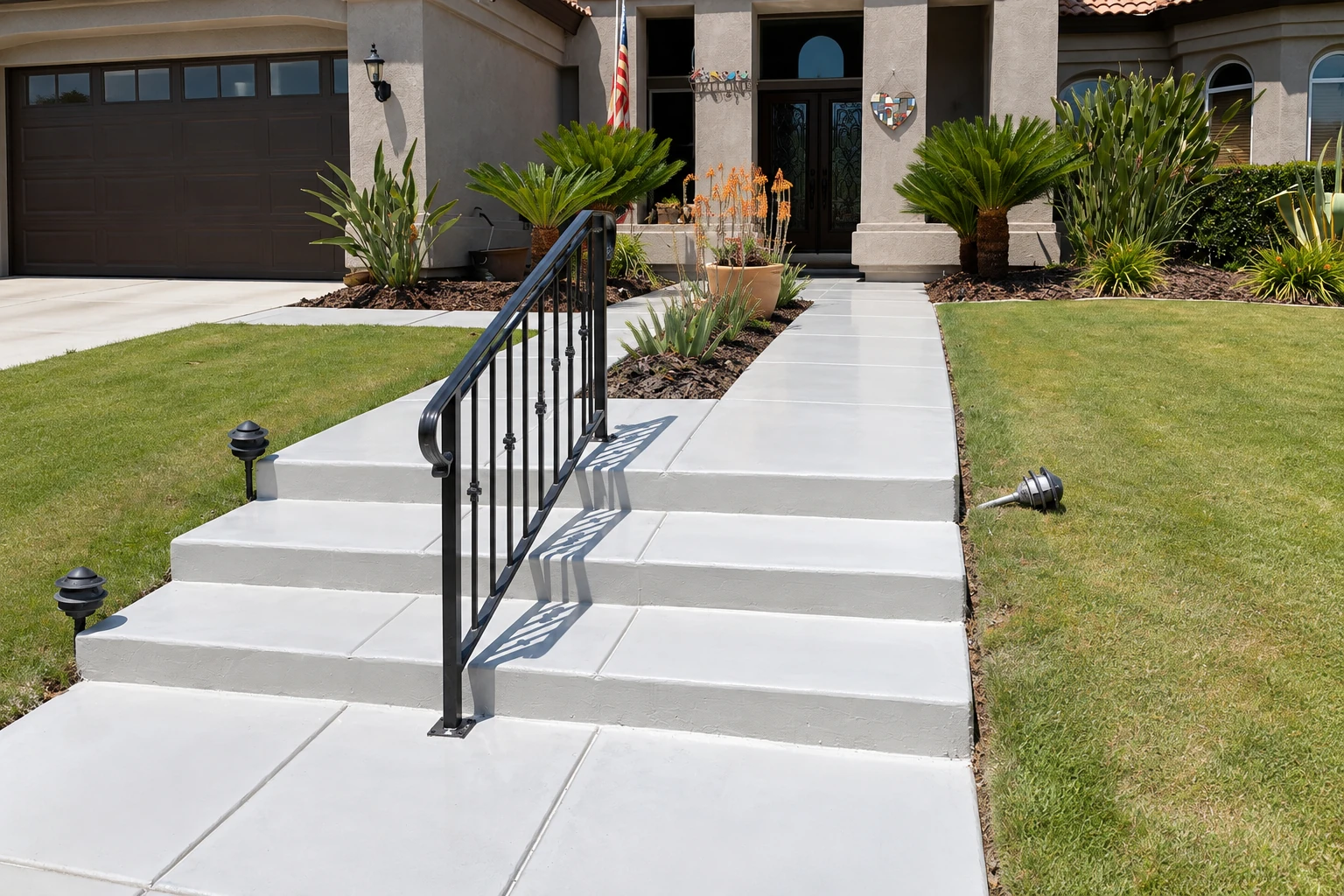
Concrete steps construction in the City of Atwater means replacing cracked, sinking or uneven steps, or adding new ones, with steps that are either precast in a factory and set in place or formed and poured at your house, so you have a solid, even way in and out.
The price comes down mostly to how many steps you need, how wide they are, whether you go precast or poured, the finish, and whether the old steps have to be broken out and hauled away first. The schedule turns on that same precast or poured choice, which I explain below, and on whether your job needs a permit. Your written estimate will show what's included for your steps.
We're licensed and insured, and you're welcome to check any contractor's license, ours included, with the state before you hire anyone.
I come out myself to look at your entry, measure it and talk it through with you, then write up the estimate so you can see what's included before you decide.
We've been pouring concrete since 2013, and most of our calls come from homeowners, so I'm used to explaining each part of the job in plain words before we pour.
Our crew does the work, and I'm there for the pours and the final walkthrough, so the person who measured your steps is the one checking them at the end.
When I come out, we talk through precast or poured steps based on your entry and how much room there is to work, because the shape of the doorway and the yard usually settles the choice. What I watch most closely after that is keeping each step the same height and depth, since even a small difference from one step to the next is what catches a toe and makes a set of stairs feel wrong.
On poured steps, our crew digs out and packs the base, builds the forms and pours early in the day, because concrete that dries out too fast in the midday heat ends up with a weak, dusty top. Then the steps need to cure, the wait while the concrete gains strength, so I'll ask you to stay off them until we say they're ready. If the budget gets tight, I'd recommend saving on the finish before the base, because nobody sees the ground under the steps on day one, but it's the part you can't fix later.
If you're building new, we can plan the steps alongside slab foundation building or foundation installation so the top step meets the door at the right height. We're based in Atwater and work in many of the cities around it, so if you don't see your city listed, please call and ask.
Precast steps are made in a factory, so they come out consistent and go in faster. If your entry is a common size and you'd like the job done quickly, I'd usually lean that way.
Poured steps are formed to your entry, so they can curve, wrap a corner or run as one continuous flight. They take more time and work on site, which is the trade for that freedom.
Precast steps are limited in size and shape by what a truck can carry, and setting them takes precise leveling and sometimes a crane. For a big entry or cramped yard, poured may work better.
A broom finish brushed into the surface, exposed aggregate and textured form liners all give good traction. A non-slip sealer with grit helps even more when sprinklers or rain wet the steps.
Send the form with a few photos of your entry, and we'll reply within one business day. I'll come out, measure and talk it through, then write up a free estimate with no obligation.
Estimates are free and I do them at your house, because I need to see the entry, the landing and the room to work before I can price your steps honestly.
I write up each estimate so you can see what's included, such as the finish, any reinforcement and removing the old steps, before you decide anything.
If you're already leaning toward precast or poured steps, please mention it in the form, because it helps me bring the right questions and measurements to the visit.
These examples show broom, exposed aggregate and textured finishes, plus straight and curved layouts, to help you picture what fits your entry.
Here are plain answers to common questions about new concrete steps, from the cost per step to permits and checking a contractor's license.
Installed poured concrete steps across the US usually cost about $200 to $500 per step, so treat that as a national guide rather than our price. Width, the finish and whether old steps come out move a job around in that range, and I'll write up your own figure after I've measured.
New steps can still crack, but reinforcement, steel set inside the concrete, helps control it, and even small stoops benefit from a minimum amount. It matters more when steps are wide, carry heavy loads or are part of a larger structure, so I'd recommend checking whether any quote you get includes it. Ours will say so in writing.
The City of Atwater Building Division issues building permits, and applications, plan reviews and payments go through its online Cloudpermit system. If your steps need a permit, we'll tell you which office handles it and settle with you up front whose name it's in. When it's in our name, we take care of the filing and book the inspections.
You can look up any contractor's license online with the state licensing board, including any complaint disclosure, before you hire someone for new steps. The board requires a license for anyone building or altering a structure on a project with a permit, added workers, or $1,000 or more in labor and materials, and its C-8 Concrete Contractor class covers forming, pouring and finishing concrete.
Hard freezes usually aren't the design concern here, because the city lists weathering as negligible and no winter design temperature in its posted design requirements. That's why we put more of our attention on a surface that grips when it's wet and on steps that shed water instead of letting it sit where you step.
Check them now and then for cracks, loose pieces, pooling water and railings that have worked loose. Clearing off debris and plants, resealing when the surface calls for it and fixing small defects early keeps minor wear from turning into a bigger repair.
Use the form or call, and a few photos of your door and yard let me see the room to work before I visit.