
Replacing a slick or cracked deck
When an old deck has worn smooth, chipped or cracked, we take it out down to the base and start fresh, because a new top over a failing base usually fails the same way.
Slick, hot or cracked concrete around your pool? We build decks with a finish picked for grip and comfort, sloped to drain away.
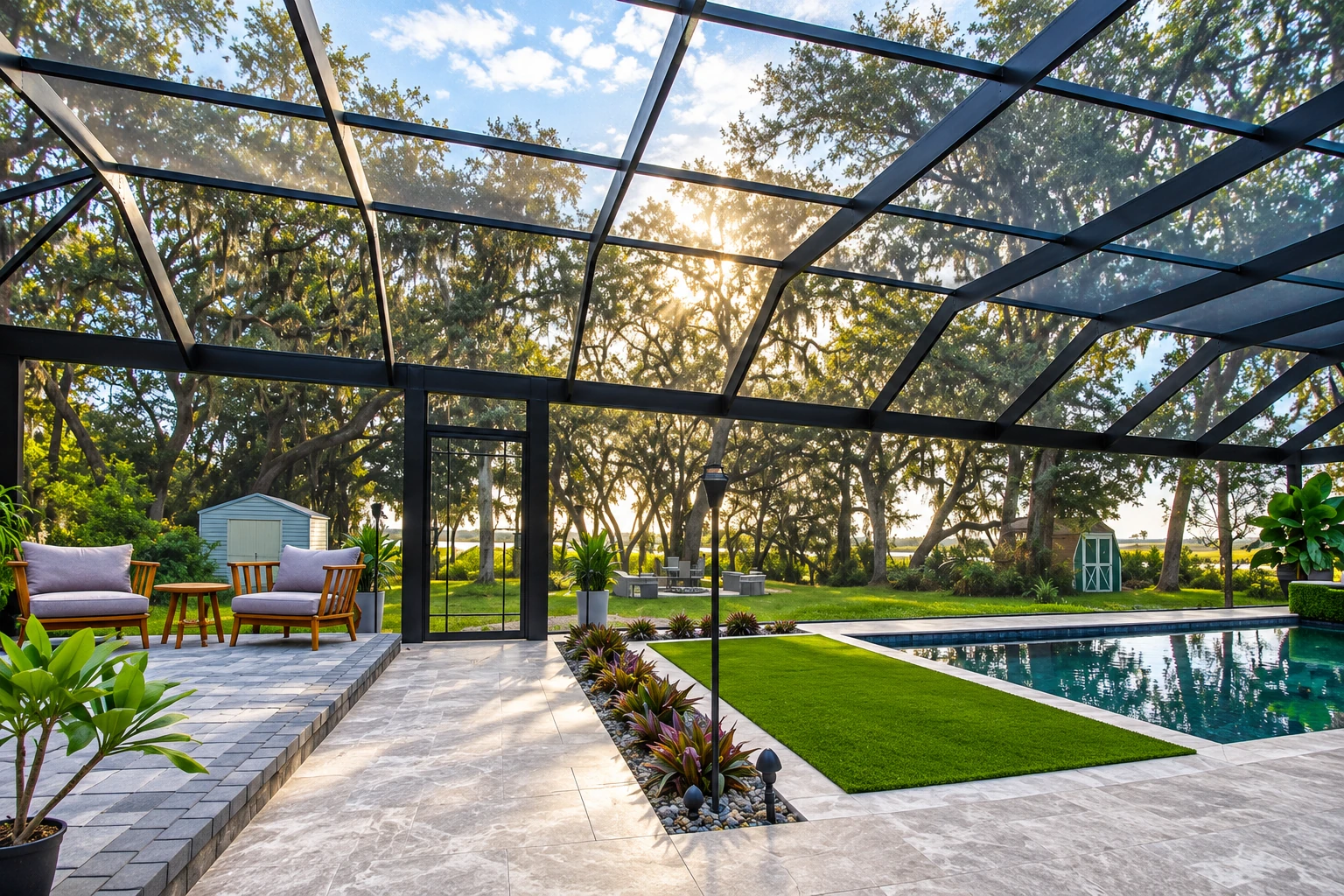
A concrete pool deck in City of Atwater is the slab people cross wet and barefoot, so we build it with a finish that grips, feels comfortable underfoot and sends water away from your house.
A lot of calls start with a deck that's gone slick, chipped near the steps or cracked along the edge of the pool, or with a new pool that needs a deck around it. The price turns mostly on the size in square feet, the finish you pick, whether we're tearing out old concrete first and how easily our crew can get the pour into your backyard. The schedule turns on the tear-out, the weather on pour day and curing, the wait while the concrete hardens before it's ready for chairs and wet feet. When I come out, I write the estimate up so you can see what's included before you decide.
We're licensed and insured, and the state licensing board's concrete contractor classification is the one that covers forming, pouring, placing and finishing flatwork like decks, walks and patios.
Around a pool, grip comes first, so I'll walk you through each finish for how it holds wet feet and how warm it gets in the sun before we talk about color.
I come out myself to look at your pool area, measure the deck and talk it through with you, and I'm back on site for the pour and the final walkthrough.
I'd rather spend extra time on the ground under your deck than rush to pour, because a soft or poorly packed base is the one part you can't fix later.
Before we form anything, I'll ask what's in your pool and where you'd like the deck to drain, because both change how it's built. Then our crew digs out the old deck or the loose soil and packs the subgrade, the ground the slab sits on, so the deck doesn't settle with the dirt. We set the forms so the surface falls away from the house and toward any drains, because a deck that tips the wrong way puddles or runs water at your foundation.
We pour early in the day, since concrete that bakes in midday heat can end up with a weak, dusty top. We cut control joints, shallow grooves that tell the slab where to crack, as soon as the concrete will take them, because a late or skipped cut leaves cracks in places nobody chose. The deck and the pool shell can move differently, so the joint where they meet should follow your pool designer's details rather than tying the two together with extra rebar, the steel that holds a slab together inside.
Atwater's building design criteria rate weathering as negligible and list no winter design temperature, so we plan around pool water, sun and drainage instead of hard freezes. If the deck needs concrete steps down from the back door, or you're adding a pool house that needs a slab foundation, we can plan it with the deck so the levels and the drainage line up.
When an old deck has worn smooth, chipped or cracked, we take it out down to the base and start fresh, because a new top over a failing base usually fails the same way.
A new pool needs its deck planned around the coping, the drains and the equipment, so I like to talk with you early, before the levels around the pool are set.
Plenty of decks are too narrow for a lounge chair beside the water, and widening one means matching the old slope and joints so water still runs off the right way.
Steps from the house, a walk to the gate or a pad for the pool equipment all tie into the deck, so we plan their heights and drainage together.
Send the form and we'll reply within one business day to set a time. I'll come out to measure and talk it through, then write up a free estimate, with no obligation, so you can see what's included.
A rough length and width of the deck you have in mind is plenty, because size is the biggest part of the price and it helps me plan the visit.
Photos of the old deck, the coping, the drains and the way into the backyard show me what needs to come out and how our crew will get the concrete in.
Please tell me whether the pool runs on salt water or chlorine and whether it's built yet, since both change how we build and finish the deck around it.
These examples show broom, exposed aggregate and stamped finishes and deck layouts, so you can point to what you like when we talk.
Here are plain answers to what homeowners ask us about finishes, sealers, cost, drainage and permits for a pool deck in Atwater.
Choose for grip first and go lighter in color, because broom, exposed aggregate, stamped and coated finishes vary a lot in both traction and heat. One materials publisher says lighter exposed aggregate stays cooler than dark-stained stamped concrete, which can get hot enough to burn bare skin in direct summer sun. A broom finish, fine ridges dragged across the wet surface, is the plain option for grip.
One materials publisher advises against film-forming acrylic sealers around pools, even ones with anti-slip additives. It says chlorinated water and sun break them down fast, so they need resealing every 8 to 12 months. Whatever goes on your deck, pool chemicals collect at the splash zones, so rinse spills, keep any coating or sealer up as its maker directs and keep the drains clear.
A standard concrete slab with a basic broom finish, installed, usually costs about $9 to $14 per square foot in the Central Valley, so treat that as a starting point rather than a pool deck price. A decorative finish, more drains or tearing out an old deck can raise it. I'll measure your deck and write up an estimate so you see your own figure.
Ask Atwater's Building Division, which handles plan reviews and field inspections of building work in the city. Its permit counter is at building@atwater.org or (209) 357-6343, open Monday to Friday from 8 AM to 4 PM and closed for lunch from noon to 1. If your job needs one, we'll settle with you up front whose name it's in, and when it's ours, we file it and book the inspections.
A pool deck should drain away from your house and toward or away from its drains as designed, without sending dirty runoff into the pool. The Atwater soil series is very deep, well drained ground formed from material washed down from granite, but good soil doesn't help a deck that's sloped toward the house, so please ask any contractor where the water will go.
It can, so please tell us if your pool runs on salt water. Salt adds chloride exposure, which can matter for the rebar inside the slab and for metal fixtures like ladders, rails and drain grates. Knowing it before we start lets us plan the deck and the hardware around it.
We answer seven days a week from 7 AM to 11 PM, so call (209) 280-3262 or use the form whenever it suits you.