
Front walk to the door
This is the walk you and your guests use every day, so we shape it to carry water away from the house and keep it from pooling at the front step.
If your walk is cracked, uneven or pooling water, we'll replace it with one poured on ground we've wet and packed first.
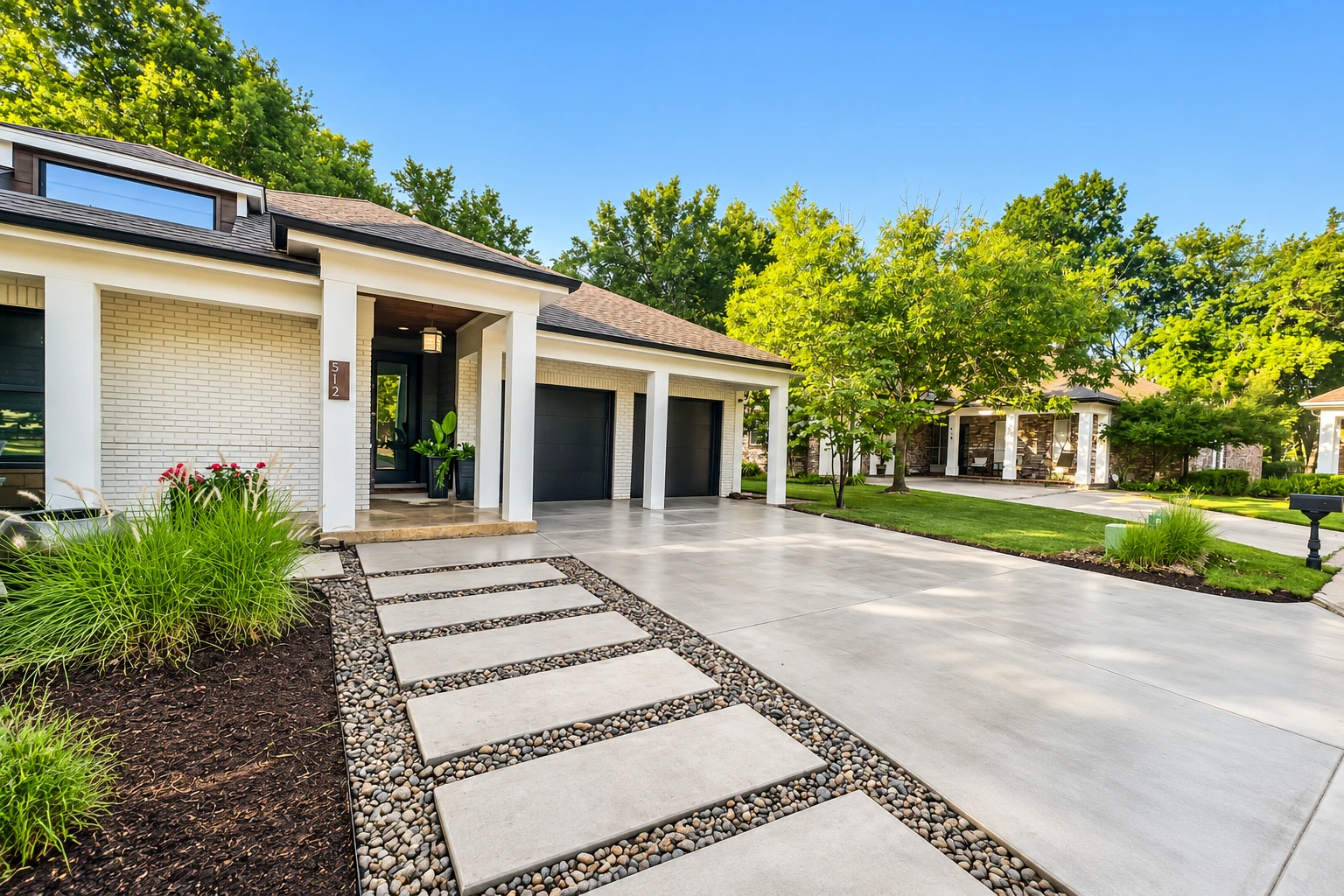
Concrete sidewalk building in the City of Atwater means we form, pour and finish a new walk on ground we've prepared to carry it, so you end up with a path that sits level, drains and gives you good footing.
Most calls start with a walk that's cracked, sunk at one end, lifted by a root or holding water after the sprinklers run. The price mostly comes down to the walk's length and width, how much old concrete has to come out, how much soft ground we have to dig out and replace, how easily a crew and a truck can reach it, and the finish you choose.
The schedule turns on the weather on pour day, on any permit the work needs, and on curing, the wait while the concrete gains strength before you use it. If any of the walk falls in the City right of way, I'll tell you which office handles the permit before we set dates. When I come out, I'll measure and write up an estimate so you can see what's included before you decide.
I started this business in Atwater in 2013, and we're best known for flatwork, the driveways, patios and walks that lie on the ground, built so they sit level and shed water.
I'd like you to know what you're getting before we start, so I explain why each step matters and answer your questions as plainly as I can.
I come out myself to look at your walk and measure it. Our crew does the work, and I'm on site for the pour and for the final walkthrough with you.
A walk is only as good as the ground under it, so we start with the subgrade, the soil the concrete sits on. We wet it and pack it down, and wherever it's soft or spongy we dig it out instead of pouring over it, because those are the spots that sink and crack first. Before the forms go in, we check where the water runs, so the finished walk sheds rain away from your house instead of toward it.
The base is the part you never see once the walk is in, so it's usually the first thing a low bid trims. I'd recommend spending there before you spend on the finish, because a nice surface can't save a walk that settles.
After the pour we cut control joints, shallow grooves that give the concrete a chosen place to crack as it shrinks, and we cut them on time so cracks are less likely to wander. A broom finish, the light texture dragged across the top, gives you footing when it's wet, and then we protect the surface so it doesn't dry out too fast while it cures. The same ground-first approach carries over to garage floor concrete, and if you'd like color or a pattern on your walk, we can talk about decorative concrete when I come out.
This is the walk you and your guests use every day, so we shape it to carry water away from the house and keep it from pooling at the front step.
The ground beside a house often stays soft where downspouts and sprinklers have soaked it for years, so these runs are where we usually find spots to dig out.
We break out the old concrete and haul it away, then look at why it failed, which is usually ground that settled, before anything new goes down.
A walk that links your patio, shed or back gate can be finished to go with the concrete you already have, so the yard reads as one piece.
Send the form and we'll reply within one business day to set a time. I'll come out, measure the walk and write up a free estimate showing what's included, with no obligation.
Please have the site address, the walk's rough length and width and your preferred dates handy, because that helps me plan the visit and talk through timing with you.
Because I write out each step, you can hold our plan next to another contractor's and see whether both dig out soft ground and protect the fresh concrete.
That's our promise to you. If anything in the plan or the price isn't clear, please ask before you decide, because I'd rather answer it now than leave you guessing.
Broom finishes, borders, curves and layouts like these are worth looking through, so you can point to what you like when we talk.
Here are plain answers to what homeowners usually ask about permits, contractor paperwork, cracking, summer pours and cost before a new walk.
The City of Atwater Engineering Division issues encroachment permits, the city's permission to excavate, build or otherwise encroach on the City right of way, and it also inspects public improvements. Please ask the division about your own property. We'll settle with you up front whose name the permit is in, and when it's ours, we file it and book the inspections.
The city's encroachment permit checklist records the contractor's state license and classification, asks whether they have a current business license with the city, and asks for liability insurance that names the city as additionally insured. We're licensed and insured, and I'm glad to go over our license and insurance with you at the estimate so you can check them before you hire anyone.
A big part of it is keeping moisture in the fresh concrete, because that helps it harden properly and lowers the risk of cracking. Curing guidance lists a few ways to hold that moisture in, such as leaving the forms on, covering the surface with wet burlap or plastic sheeting, or applying a curing compound, alone or together. I'll tell you which we plan for your walk.
Yes, but the heat on pour day matters, because concrete that's hot when it sets expands, and cooling overnight may add shrinkage and raise the risk of cracking. The local Atwater soil series is described as very deep and well drained, in a semiarid climate with hot, dry summers and cool, moist winters. In summer I'd usually recommend an early start over a midday pour.
Concrete sidewalk installation across the US usually costs about $12.50 to $15 per square foot. That's a national figure, not our price, so treat it as a rough guide for a walk here. For your own number, I'll measure on site and write up an estimate that shows what's included.
We take calls seven days a week, 7 AM to 11 PM, so please call (209) 280-3262 or send the form whenever it suits you.